

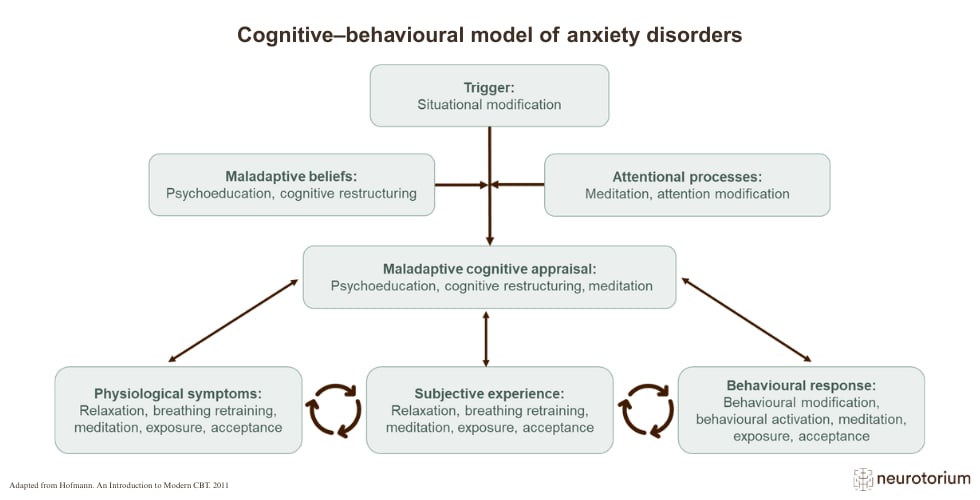
The cognitive‒behavioural model describes the maladaptive processes that can occur during mental disorders.1
Maladaptive beliefs can lead to maladaptive cognitions following exposure to certain triggers (e.g., situations, events, sensations, other thoughts).1 The triggers are evaluated and interpreted – appraisal – which leads to a subjective experience, physiological symptoms, and behavioural response.1
These feed into each other and further support the maladaptive cognitive appraisal of the situation, establishing a positive feedback loop and vicious cycle.1
Related content

Decades of twin and family research have established that anxiety disorders run in families and are meaningfully influenced by genetic factors. Family and twin studies suggest an increased recurrence risk for first degree relatives of patients with anxiety to develop any anxiety disorders.
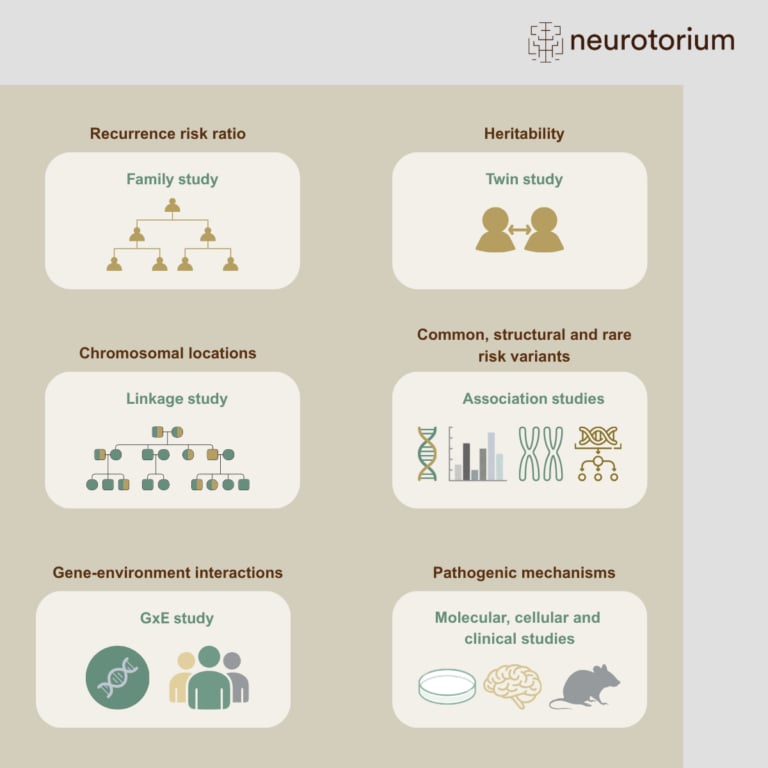
Family and twin studies estimate recurrence risk and heritability, showing that anxiety disorders aggregate in families and have a moderate genetic component.
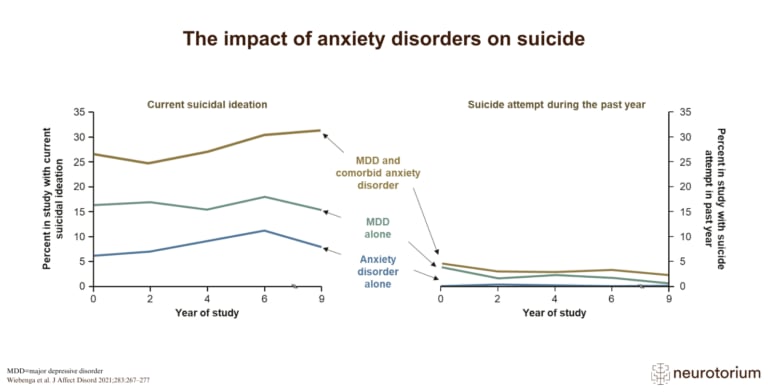
Suicidal ideation is far more common than attempts in people with anxiety or depression, especially with comorbid disorders and severe depression.