

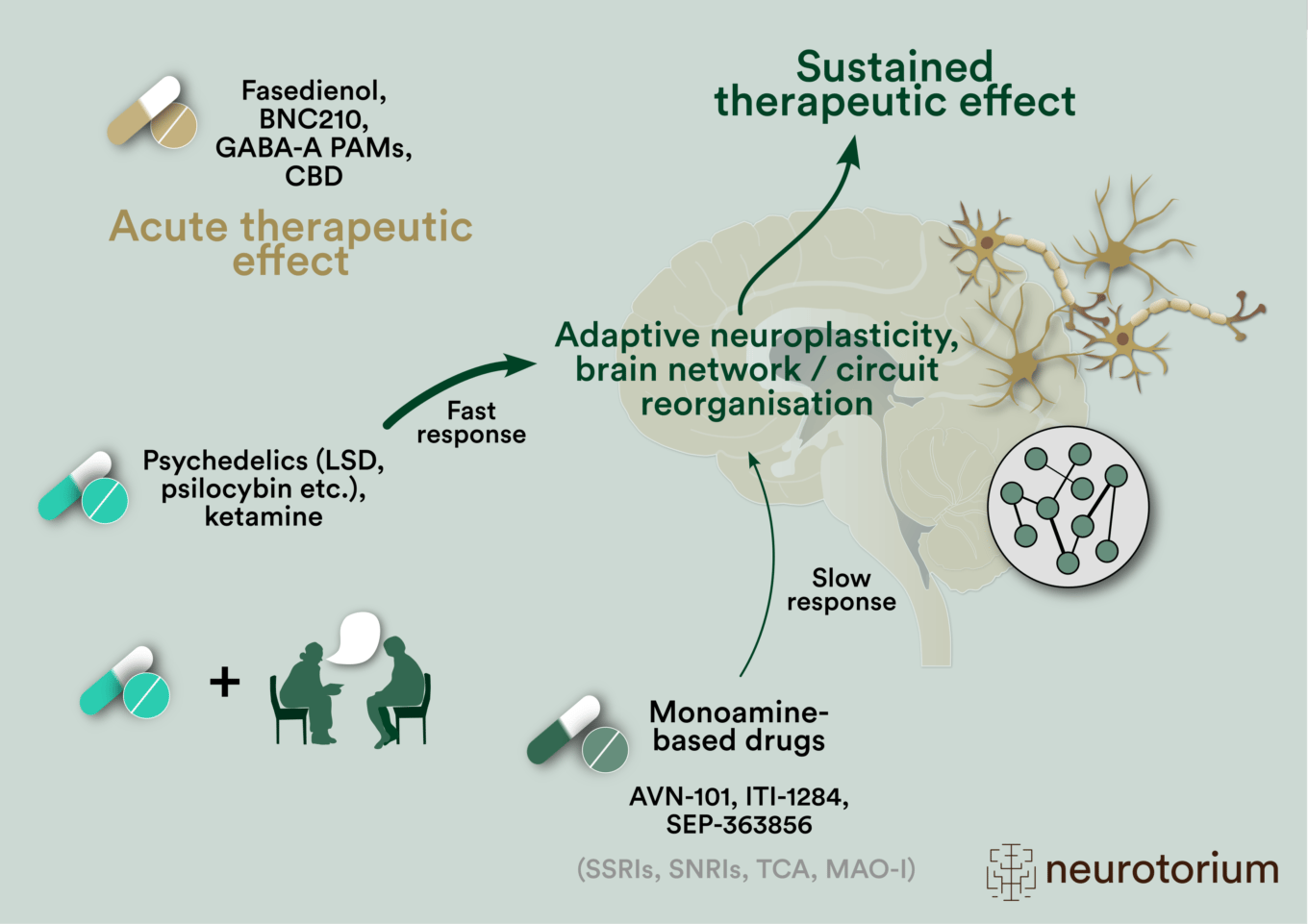
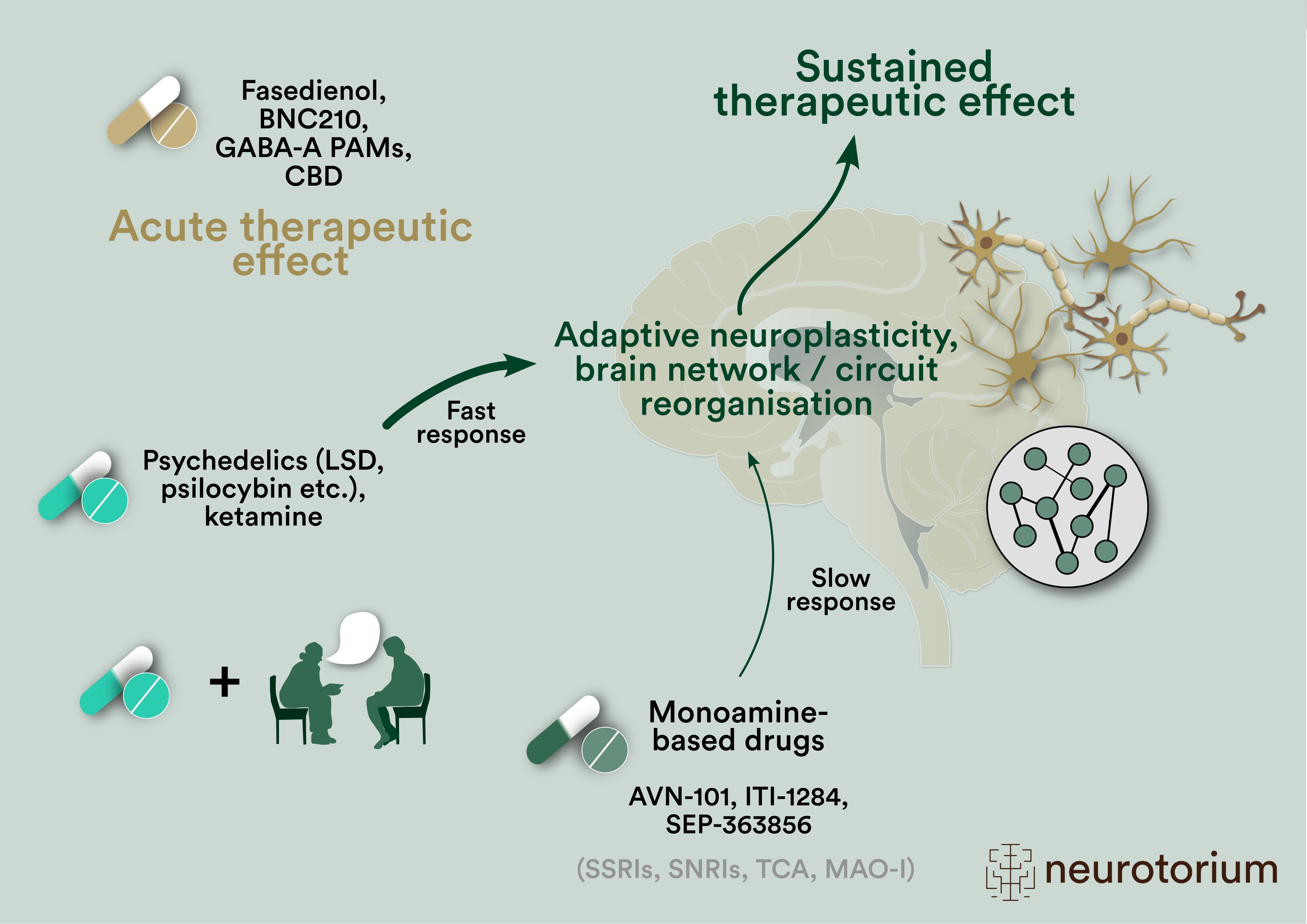
Drugs (selected) in clinical development designed to produce acute and/or enduring therapeutic effects in anxiety disorders. Depicted are also novel drug-assisted psychotherapeutic approaches utilizing neuroplasticity/cognition enhancing effects of drugs.
AVN-101: (CD-008-0045 licenced as AVIANDR in Russia) antagonist at 5-HT2A, 2C, 6 and 7 receptors, adrenergic 2A, 2B and 2C receptors and histamine H1 receptors; BNC210: α7-nAChR negative allosteric modulator (NAM); CBD: cannabidiol; ITI-1284: deuterated form of lumateperone, targets 5-HT2A, D2 receptors and SERT (serotonin transporter); LSD: lysergic acid diethylamide; MDMA: 3,4-Methylendioxy-N-methylamphetamin; PAMs: positive allosteric modulators (PAM) of the GABA-A receptor; SEP-363856: 5-HT1A receptor and TAAR1 (trace amine-associated receptor 1) agonist.
Related content

Decades of twin and family research have established that anxiety disorders run in families and are meaningfully influenced by genetic factors. Family and twin studies suggest an increased recurrence risk for first degree relatives of patients with anxiety to develop any anxiety disorders.
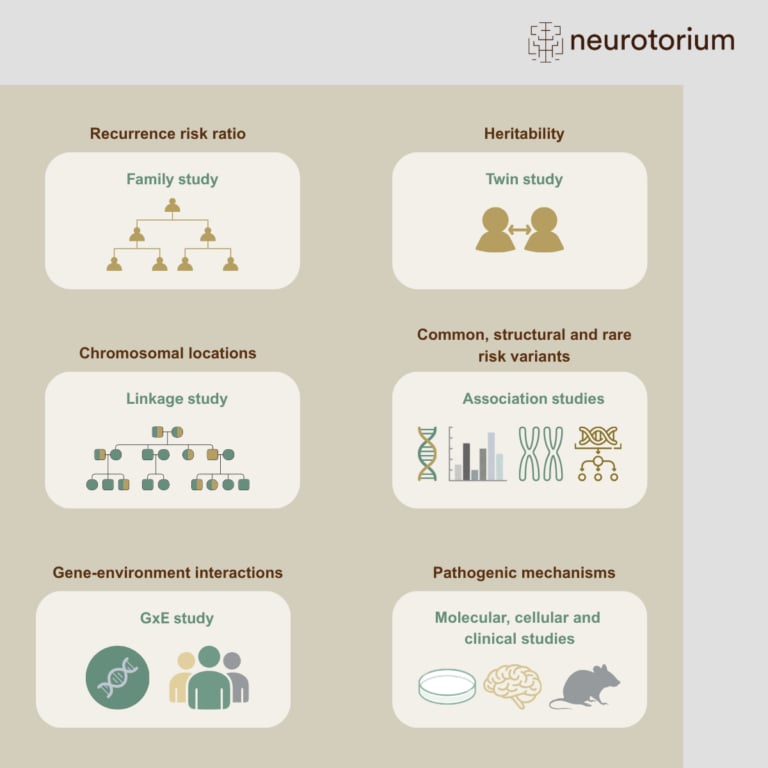
Family and twin studies estimate recurrence risk and heritability, showing that anxiety disorders aggregate in families and have a moderate genetic component.
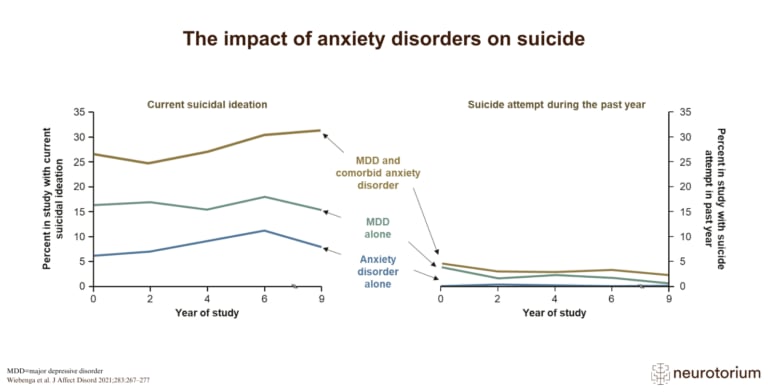
Suicidal ideation is far more common than attempts in people with anxiety or depression, especially with comorbid disorders and severe depression.