

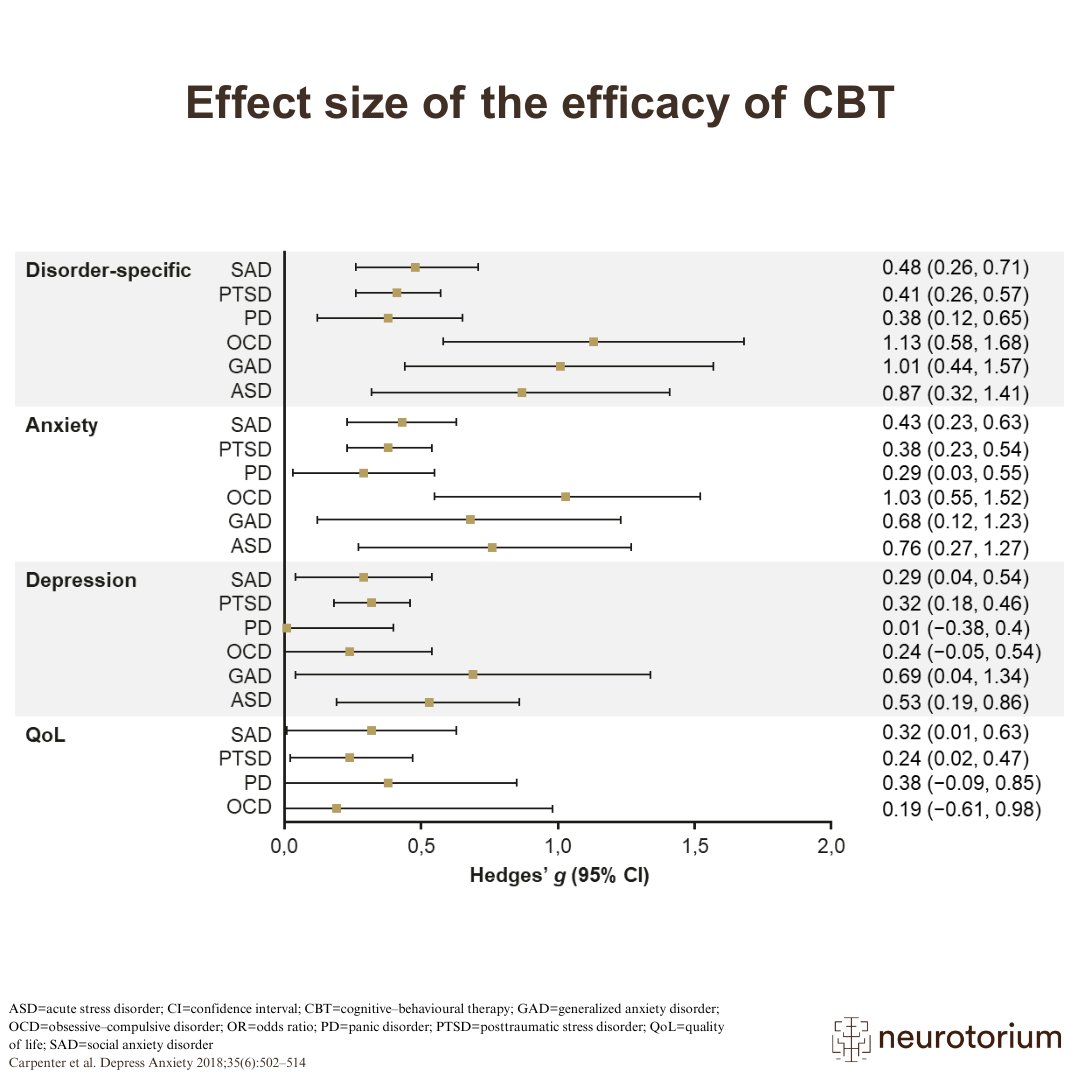
A meta-analysis included 41 randomized controlled trials that compared CBT with placebo.1 In 34 of these studies, the intervention was delivered on an individual basis, whereas in the remaining 7 studies CBT was delivered to groups.1
This meta-analysis of randomised placebo-controlled trials of CBT found:
- Moderate placebo-controlled effects of CBT on target disorder symptoms (Hedges’ g: 0.56)
- Small-to-moderate effects on other symptoms:
- Other anxiety symptoms (Hedges’ g: 0.38), Depression (Hedges’ g: 0.31), Quality of life (Hedges’ g: 0.30)
- People receiving CBT experienced better response rates compared with placebo (OR: 2.97)
There was a mean of 11 CBT sessions across the studies.1
Overall, there was an almost threefold higher response rate with CBT vs placebo.1
ASD=acute stress disorder; CI=confidence interval; CBT=cognitive–behavioural therapy; GAD=generalized anxiety disorder; OCD=obsessive–compulsive disorder; OR=odds ratio; PD=panic disorder; PTSD=posttraumatic stress disorder; QoL=quality of life; SAD=social anxiety disorder
Related content

Decades of twin and family research have established that anxiety disorders run in families and are meaningfully influenced by genetic factors. Family and twin studies suggest an increased recurrence risk for first degree relatives of patients with anxiety to develop any anxiety disorders.
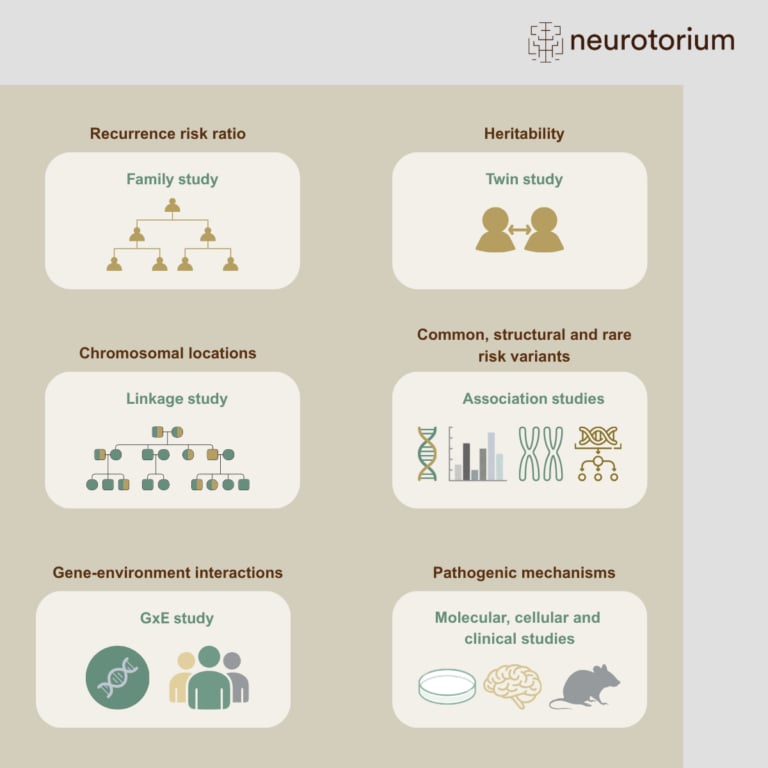
Family and twin studies estimate recurrence risk and heritability, showing that anxiety disorders aggregate in families and have a moderate genetic component.
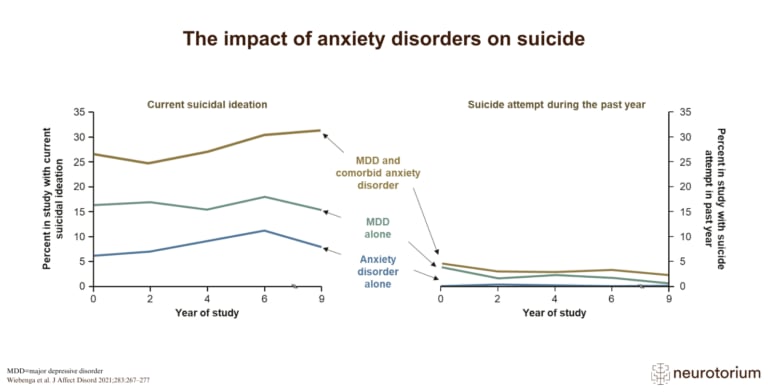
Suicidal ideation is far more common than attempts in people with anxiety or depression, especially with comorbid disorders and severe depression.