

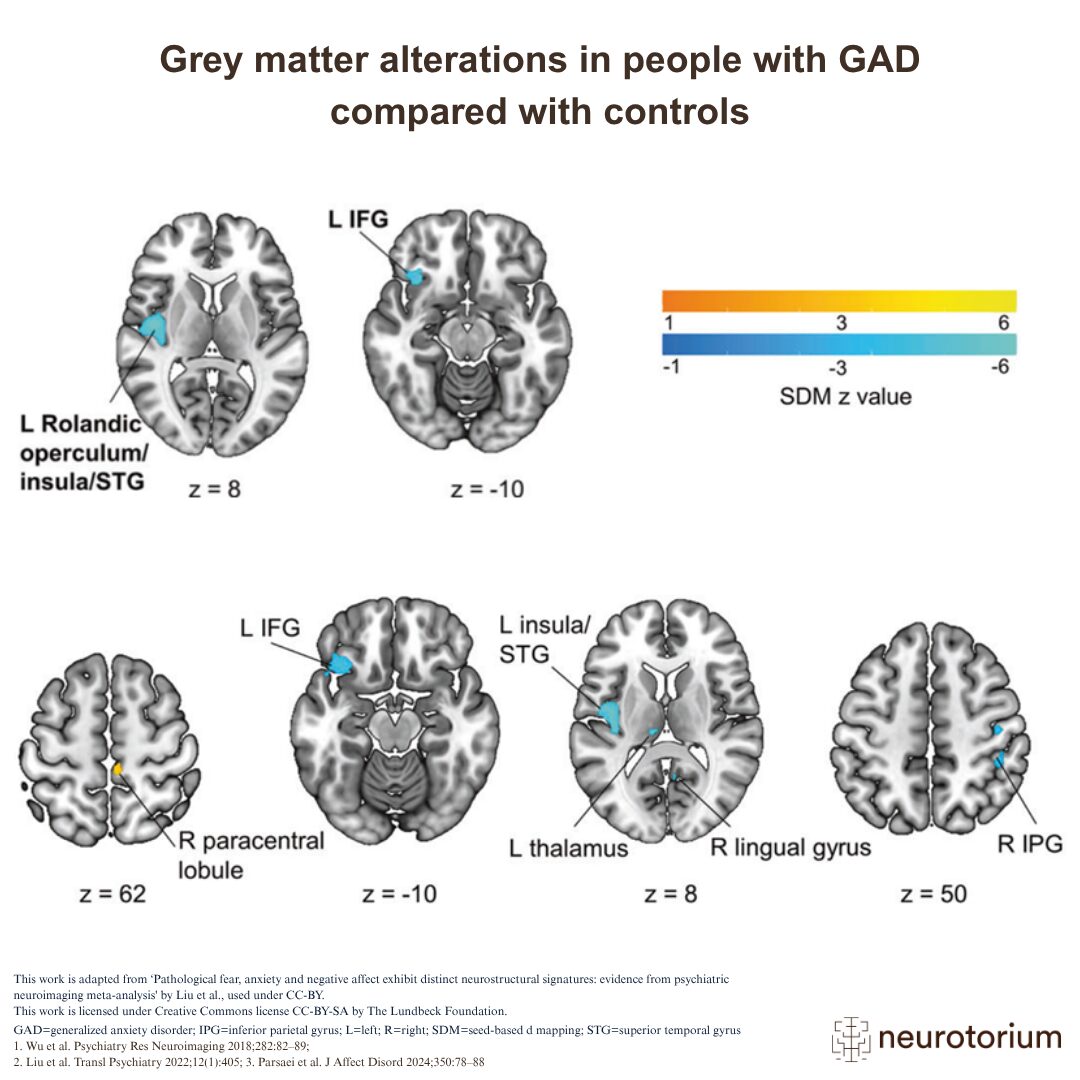
Various studies using neuroimaging techniques have identified structural differences between the brains of people with anxiety disorders and the general population.1-3 More research using more advanced techniques is needed to disentangle the exact nature of these structural changes, and understand whether they are specific to certain anxiety disorders.3
A meta-analysis found that the brains of people with GAD showed altered volumes relative to controls, and people with fear-related anxiety disorders (social anxiety disorder, specific phobias, or panic disorder) had alterations relative to GAD and controls.2
GAD=generalized anxiety disorder
Related content

Decades of twin and family research have established that anxiety disorders run in families and are meaningfully influenced by genetic factors. Family and twin studies suggest an increased recurrence risk for first degree relatives of patients with anxiety to develop any anxiety disorders.
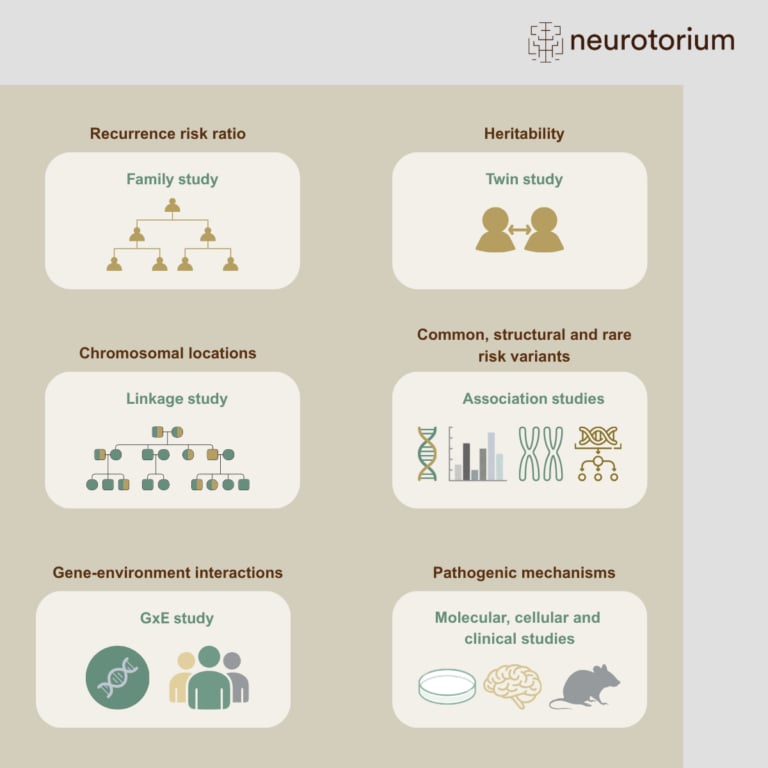
Family and twin studies estimate recurrence risk and heritability, showing that anxiety disorders aggregate in families and have a moderate genetic component.
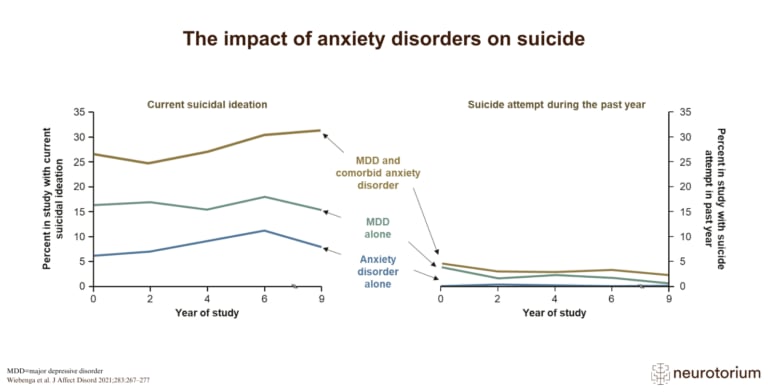
Suicidal ideation is far more common than attempts in people with anxiety or depression, especially with comorbid disorders and severe depression.