


Several AD therapies under investigation target Aβ or its aggregates and can generally be divided into four therapeutic aims: 1) to reduce Aβ generation; 2) to enhance degradation and clearance of Aβ and its aggregates; 3) to neutralize soluble Aβ monomers or the resulting toxicity; 4) to directly inhibit Aβ aggregation.1 As of August 2023, aducanumab and lecanemab are the only two FDA approved antibody-based drugs, while investigation of 38 therapies have been discontinued due to ineffectiveness or toxic side effects.1-3
Access our Slide Deck on treatment principles of AD and learn more about pharmacological treatment of AD.
Related content

Advances in blood biomarkers are transforming the diagnosis and prognosis of Alzheimer’s disease, helping to assess pathology, disease progression, and co-existing pathologies.
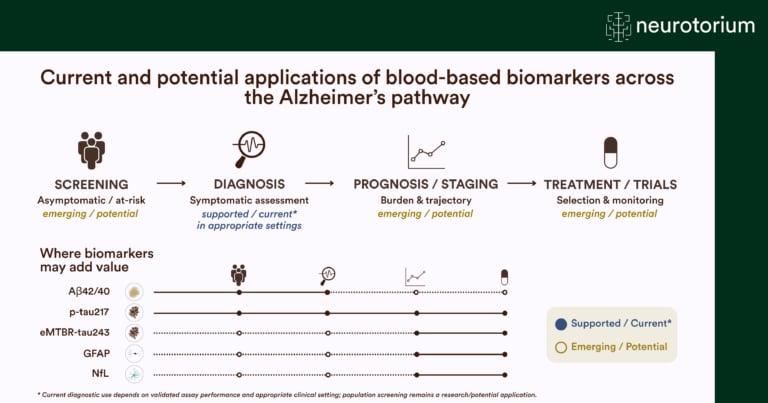
Overview of how blood-based biomarkers may support screening, diagnosis, staging, prognosis, and treatment decisions across the Alzheimer’s disease continuum.
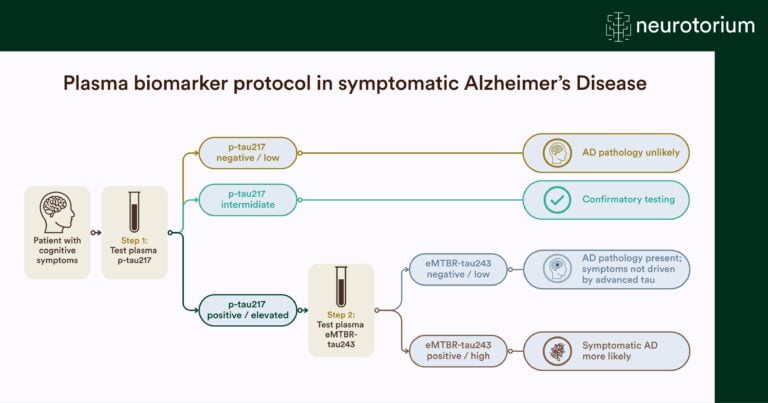
Overview of a plasma biomarker testing pathway for symptomatic Alzheimer’s disease, using p-tau217 and eMTBR-tau243 to guide diagnostic assessment and identify underlying pathology.