


Images
Filter
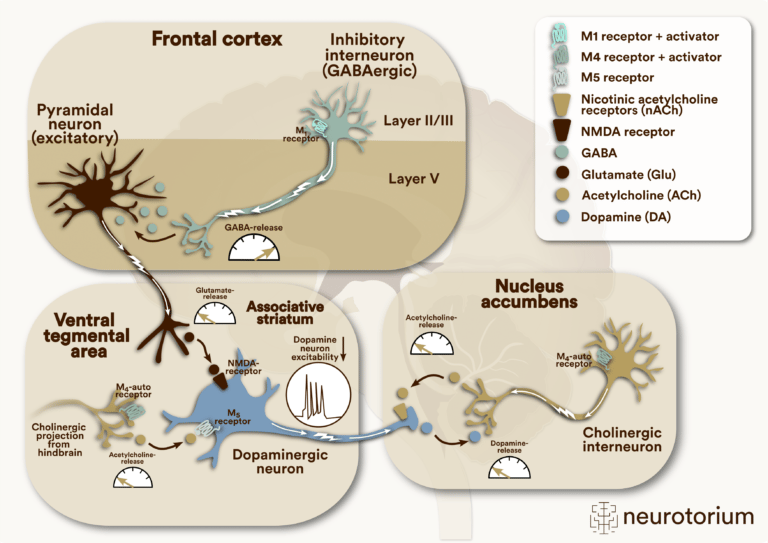
Stimulation of M1 receptors in layer II/III of the frontal cortex, however, increases acetylcholine, which in turn stimulates the inhibitory GABAergic interneuron.
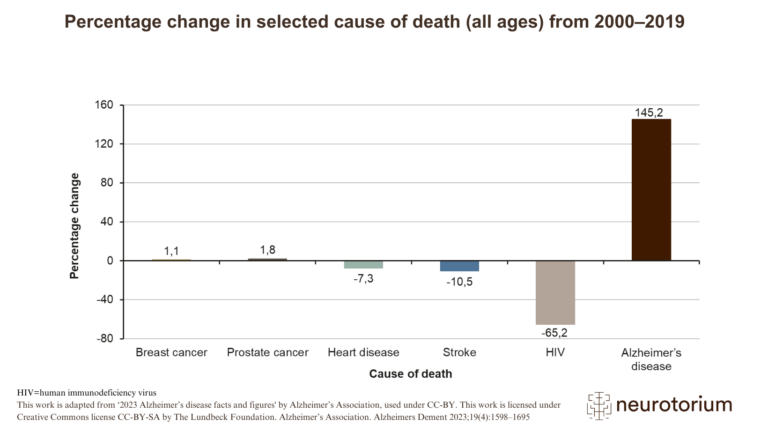
An overview of percentage change in selected cause of death (for all ages) from 2000-2019. The image shows, that Alzheimer’s disease, by far, has the biggest percentage change (145.2%) as a cause of death.
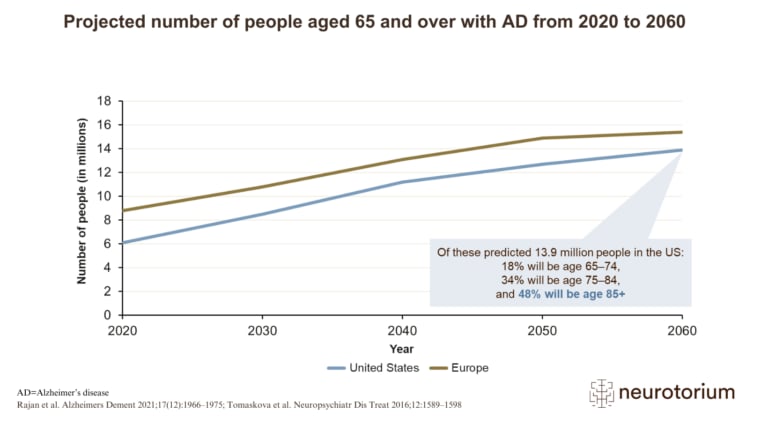
By 2025, it is predicted that the number of individuals aged ≥65 years with AD dementia in the US will reach 7.2 million, which is a 7% increase from 6.7 million affected individuals in 2023.
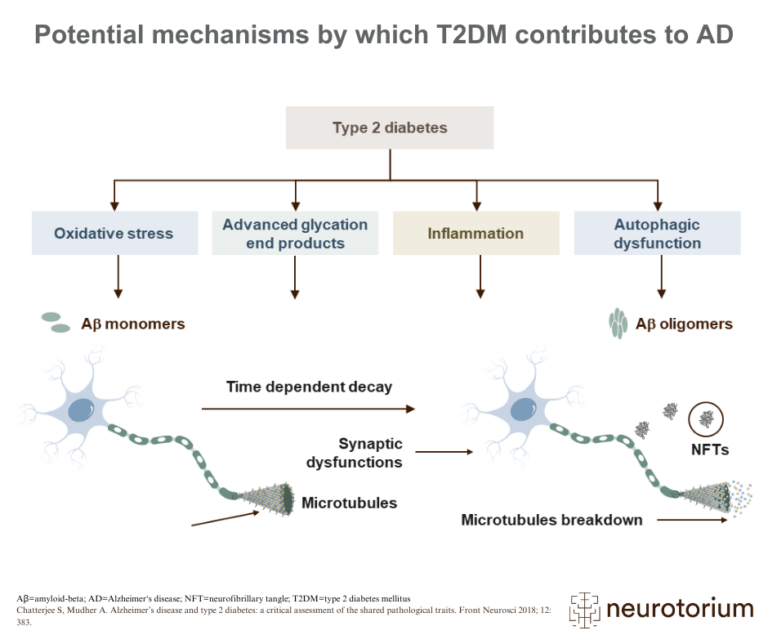
Diabetes and Alzheimer’s disease may share risk factors, including overlapping metabolic risk factors.
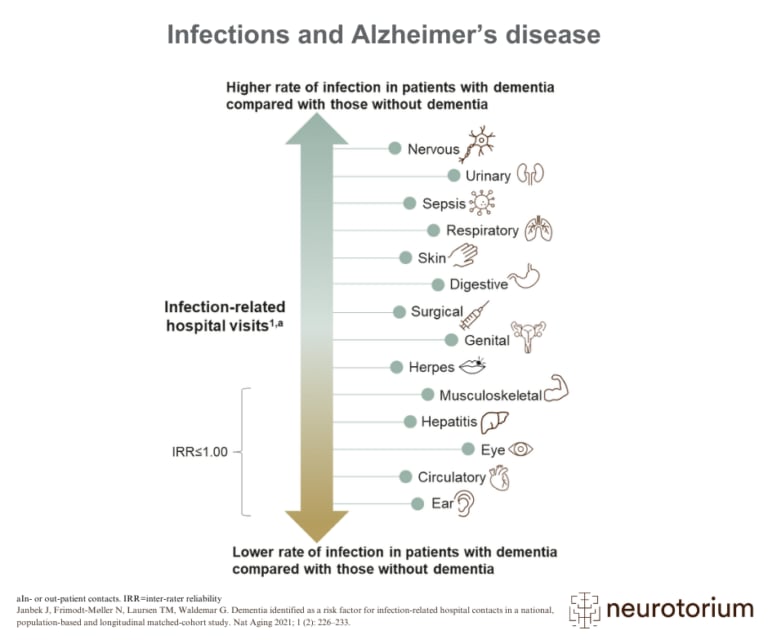
Infectious diseases are suggested to increase the long-term risk of dementia, including Alzheimer’s disease.
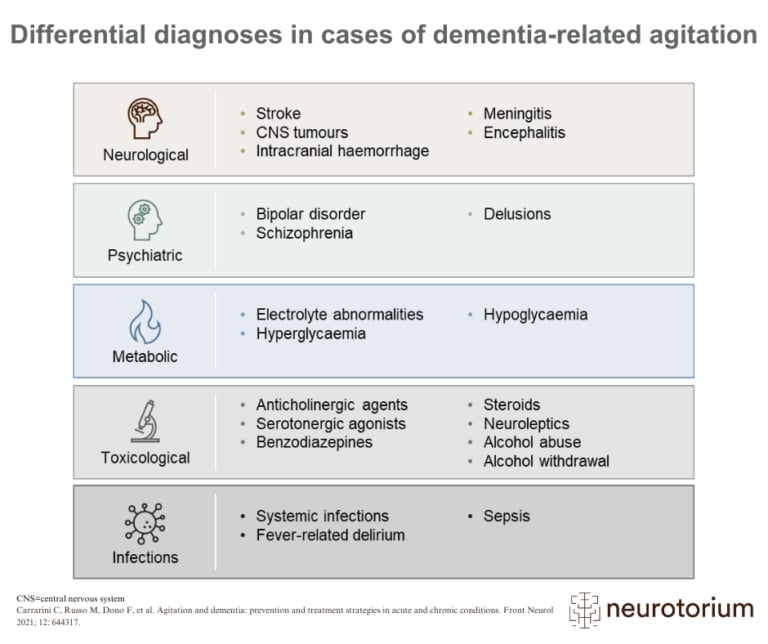
The 2023 International Psychogeriatric Association (IPA) defines agitation in Alzheimer’s dementia as excessive motor activity, verbal aggression, or physical aggression.
No results matched your search.
Please try again.