

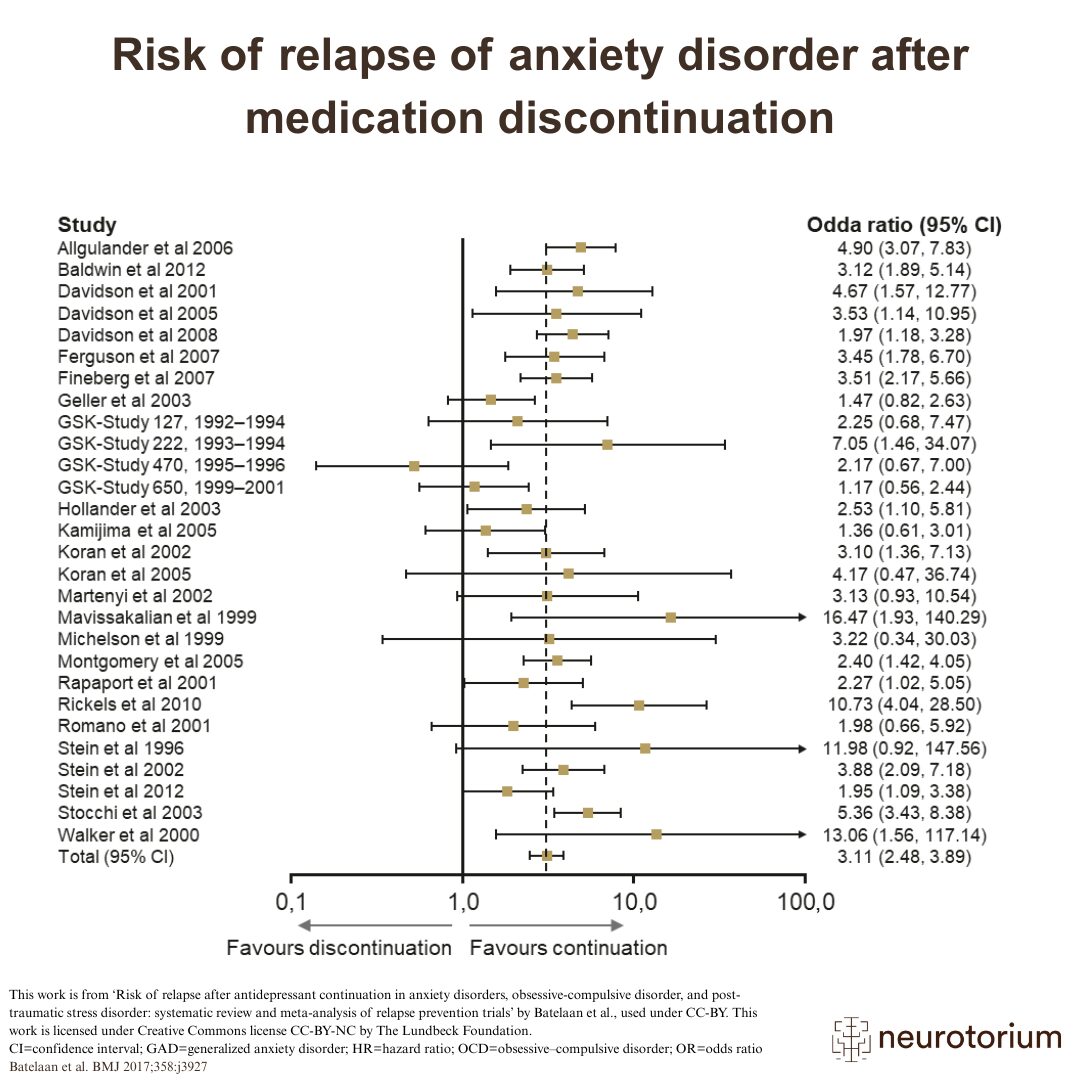
Anxiety disorders are typically chronic or episodic; however, the optimal duration of continuation treatment is not established.
A meta-analysis of 28 relapse-prevention studies (n=5,233) including studies of people with GAD, panic disorder, social phobia, OCD, and PTSD, found that:
- Antidepressant discontinuation increased the risk of relapse:
OR: 3.11 (95% CI 2.48, 3.89)- Relapse rate for placebo: 36.4% (95% CI: 30.8, 42.1)
- Relapse rate for active treatment: 16.4% (95% CI:12.6, 20.1)
- The time to relapse was shorter after treatment discontinuation:
HR: 3.63 (95% CI: 2.58, 5.10)
- The risk of relapse was not significantly influenced by:
- The type of anxiety disorder
- The duration of previous treatment
- The duration of follow-up
- The mode of discontinuation
- Any concurrent psychotherapy
CI=confidence interval; GAD=generalized anxiety disorder; HR=hazard ratio; OCD=obsessive–compulsive disorder; OR=odds ratio
Related content
Decades of twin and family research have established that anxiety disorders run in families and are meaningfully influenced by genetic factors. Family and twin studies suggest an increased recurrence risk for first degree relatives of patients with anxiety to develop any anxiety disorders.
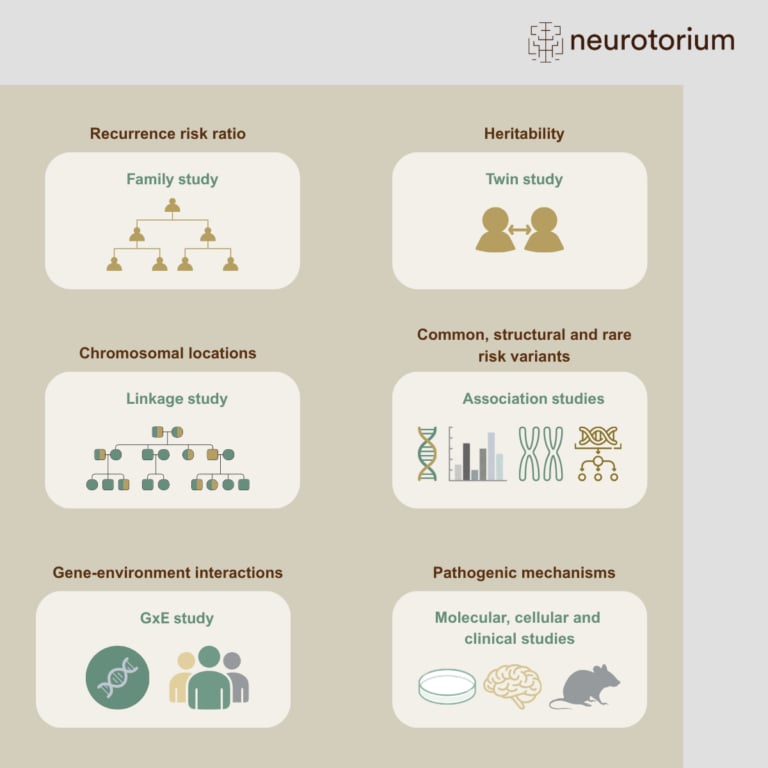
Family and twin studies estimate recurrence risk and heritability, showing that anxiety disorders aggregate in families and have a moderate genetic component.
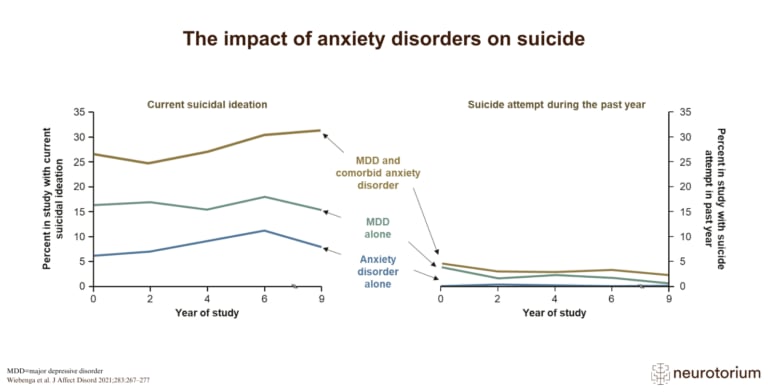
Suicidal ideation is far more common than attempts in people with anxiety or depression, especially with comorbid disorders and severe depression.