

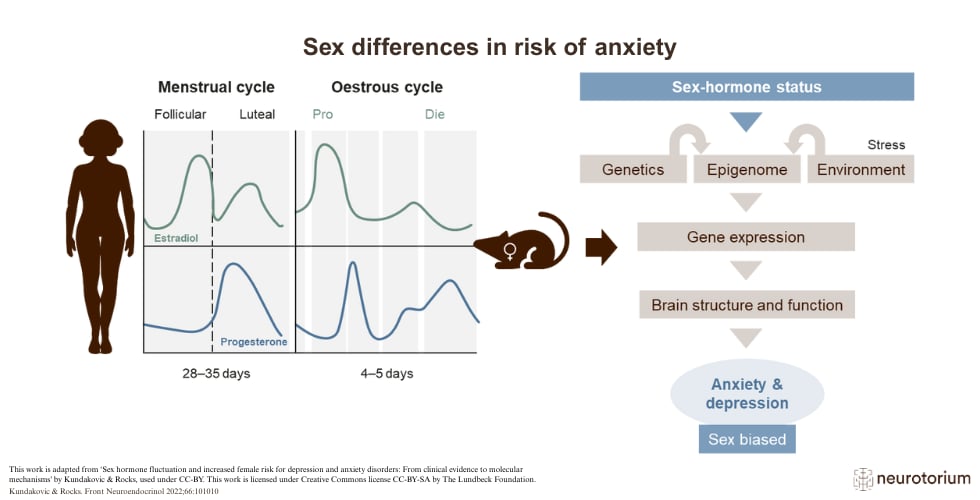
Whilst it is relatively well established from epidemiological research that the prevalence of anxiety disorders is higher in females compared with males, the reasons behind this disparity are unclear.1,2
Studies using animal models have begun to unravel some of the sex differences in pathways key to anxiety, such as fear processing, arousal, and social avoidance.2 The plasticity unique to the female brain matching the natural cycling of ovarian hormones may explain some of the greater incidence of anxiety disorders amoung women, but future studies are needed to translate observations from animal models into humans.1
Related content
Decades of twin and family research have established that anxiety disorders run in families and are meaningfully influenced by genetic factors. Family and twin studies suggest an increased recurrence risk for first degree relatives of patients with anxiety to develop any anxiety disorders.
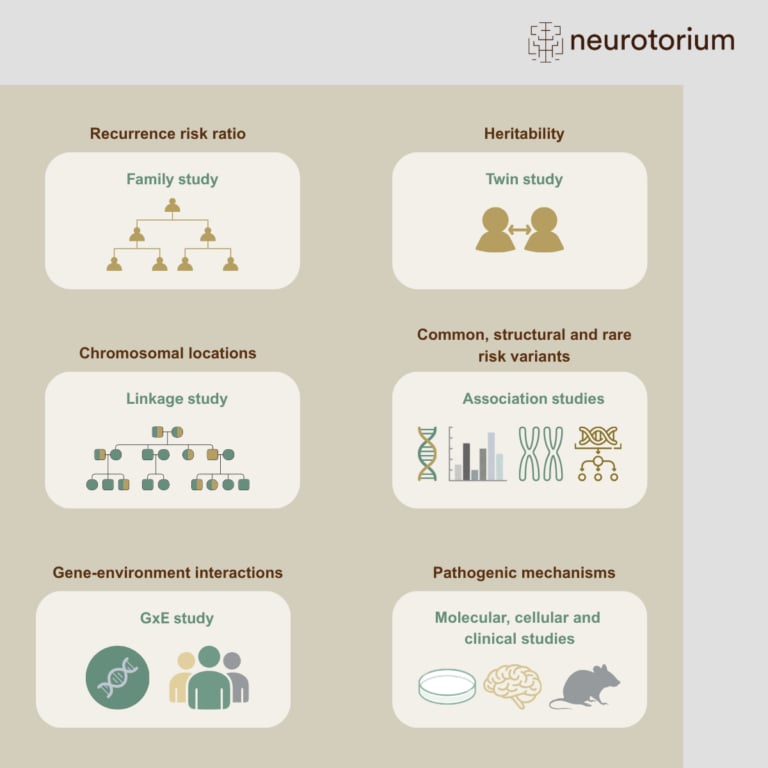
Family and twin studies estimate recurrence risk and heritability, showing that anxiety disorders aggregate in families and have a moderate genetic component.
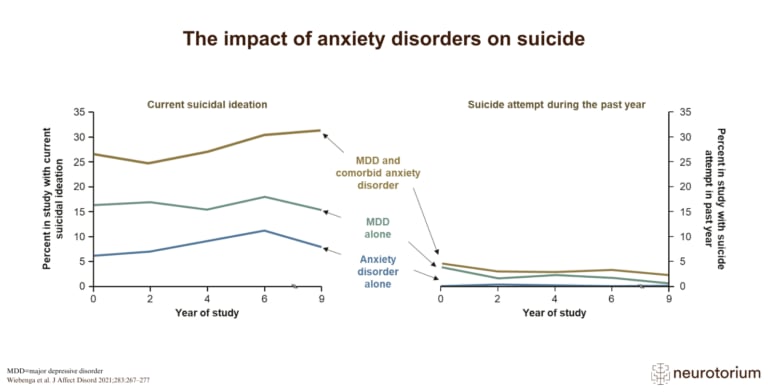
Suicidal ideation is far more common than attempts in people with anxiety or depression, especially with comorbid disorders and severe depression.