

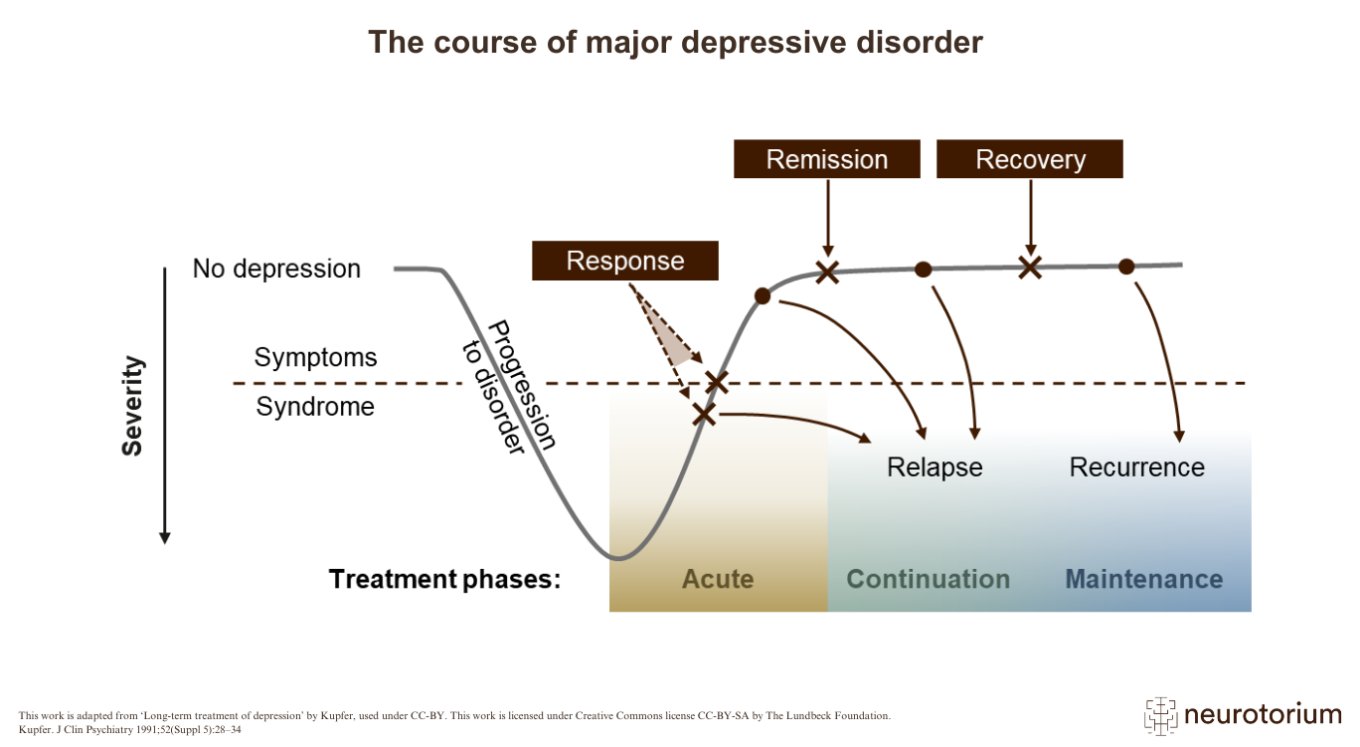
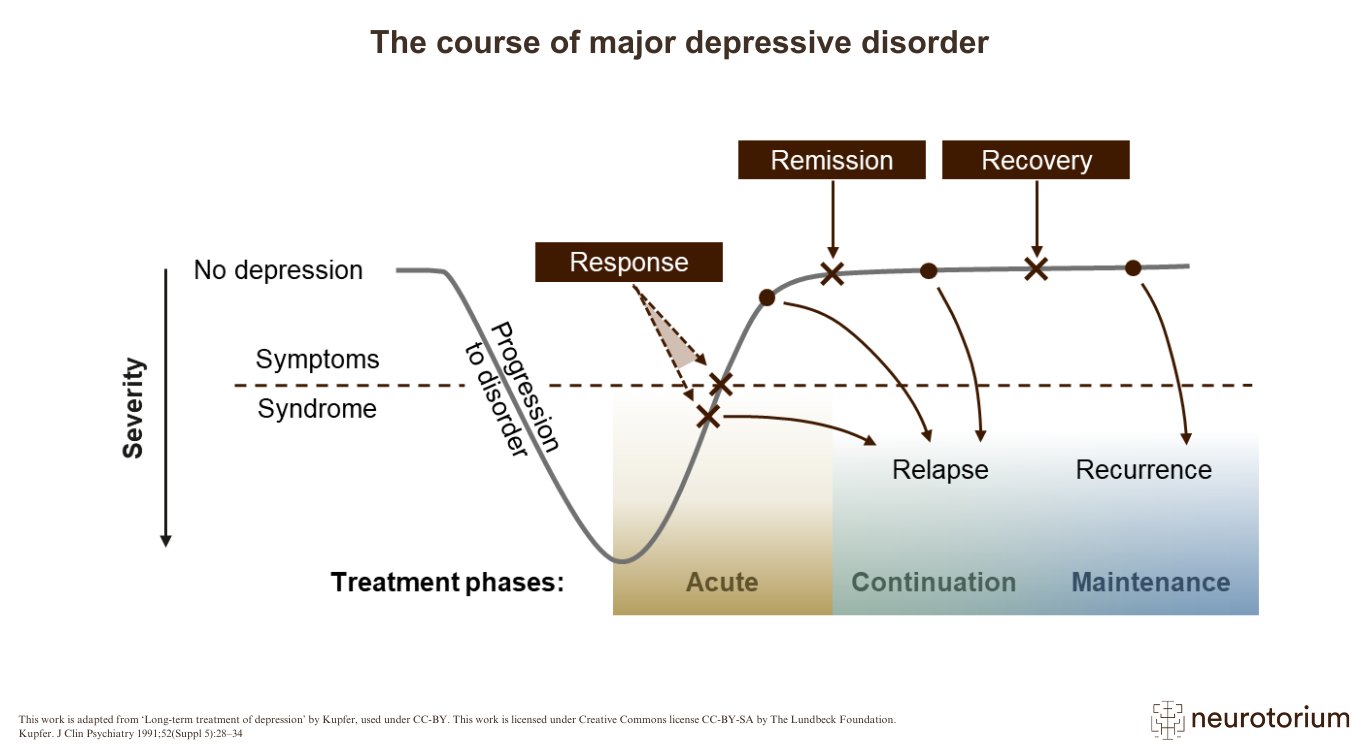
This image illustrates course of major depressive disorder (MDD).1 The optimal outcome for a patient with MDD is a full recovery from the major depressive episode and to never become depressed again.5 Treatment of MDD is divided into three phases, corresponding to different stages of the illness.6 Each of these phases has a different treatment goal.6
Acute treatment phase
‘Acute phase treatment’ of MDD occurs during a major depressive episode; it runs from the initiation of treatment until remission is achieved.1,3 The goals of acute phase treatment are to achieve remission (removal of symptoms, such that the criteria for a major depressive episode are no longer met), and an improvement in functioning and quality of life.2,3 Remission is a clinically-meaningful endpoint: patients who achieve remission are less likely to relapse than those who do not achieve remission.7,8 Response, i.e., a 50% improvement from baseline in a depression rating scale score, is an intermediate treatment goal; it is used to evaluate whether or not a treatment is benefiting the patient.3
Continuation treatment phase
‘Continuation phase treatment’ of MDD follows on from acute phase treatment, i.e., it starts when remission is achieved.1,3 The goals of continuation phase treatment are to prevent a relapse (a return of symptoms sufficient to meet the criteria for a major depressive episode) in the vulnerable period immediately following remission, to eliminate any unresolved symptoms, and to restore the patient’s level of psychosocial and occupational functioning – at least to levels seen prior to the current episode and, if possible, to levels seen prior to the onset of MDD.2,3 Continuation phase treatment continues until recovery is achieved (the end of a major depressive episode).3 The moment of recovery is difficult to identify in clinical practice.3
Maintenance treatment phase
‘Maintenance phase treatment’ of MDD follows on from continuation phase treatment, provided the patient did not experience a relapse.1,3 The goals of maintenance phase treatment are to prevent a new episode of depression (recurrence), to prevent suicide, and to enable full and lasting functional recovery.3 Typically, maintenance treatment is indicated in patients with chronic/recurrent MDD (i.e., those susceptible to recurrence).2
Note: There is a lack of empirical evidence to differentiate between relapse and recurrence, hence, the continuation and maintenance phases are often combined into a single maintenance phase4
MDD=major depressive disorder
Related content
Major Depressive Disorder (MDD) is a highly prevalent psychiatric condition with significant individual and socio-economic burden. Despite the broad availability of numerous effective therapeutic interventions, up to 30% of patients fail to achieve adequate symptom relief and are classified as having treatment-resistant depression (TRD). TRD represents a significant clinical challenge, affecting approximately 30% of individuals with MDD who fail to respond to at least two adequate antidepressant trials.
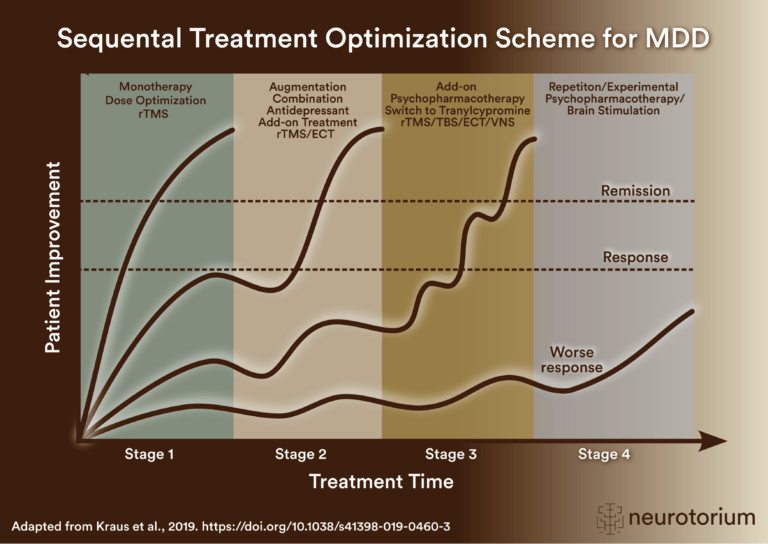
Sequential treatment optimization scheme for major depressive disorder generated according to international evidence.
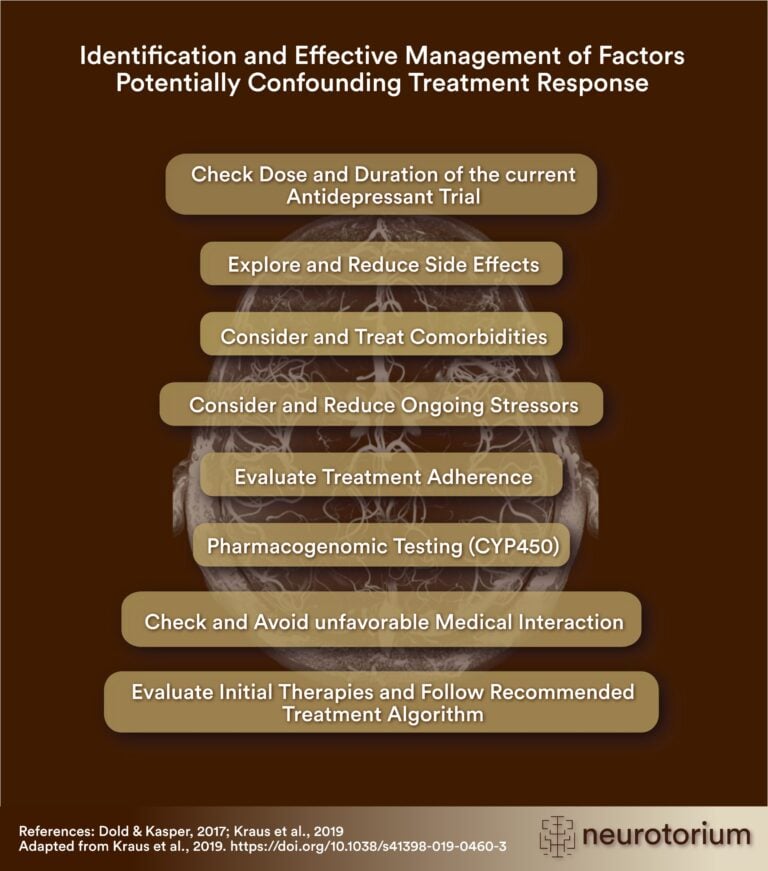
Key steps for managing factors that may confound antidepressant treatment response, including dose, side effects, comorbidities, stressors, adherence, pharmacogenomics, interactions, and treatment algorithms.