

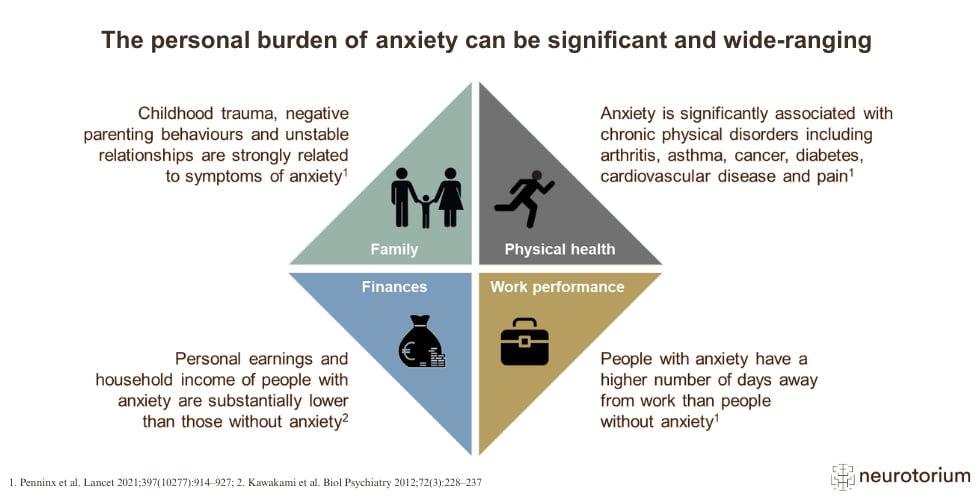
Anxiety disorders are highly disabling in part due to the combination of their early age of onset, high prevalence and the diagnosis-specific associated impairments and disabilities.3 Anxiety disorders have adverse effects on further neurocognitive development that may persist throughout the person’s life or at least have an enduring impact, impeding school and academic achievement, social functioning, and social integration.3
The presence of an anxiety disorder in childhood (i.e., separation anxiety, social anxiety disorder or generalized anxiety disorder [GAD]) has been shown to be associated with impairment in at least one functioning domain (health, financial or interpersonal) in early adulthood, when compared with people with no childhood anxiety disorder.4 The poorest outcomes were observed for childhood GAD, which negatively impacts all functioning domains.4
Related content

Decades of twin and family research have established that anxiety disorders run in families and are meaningfully influenced by genetic factors. Family and twin studies suggest an increased recurrence risk for first degree relatives of patients with anxiety to develop any anxiety disorders.
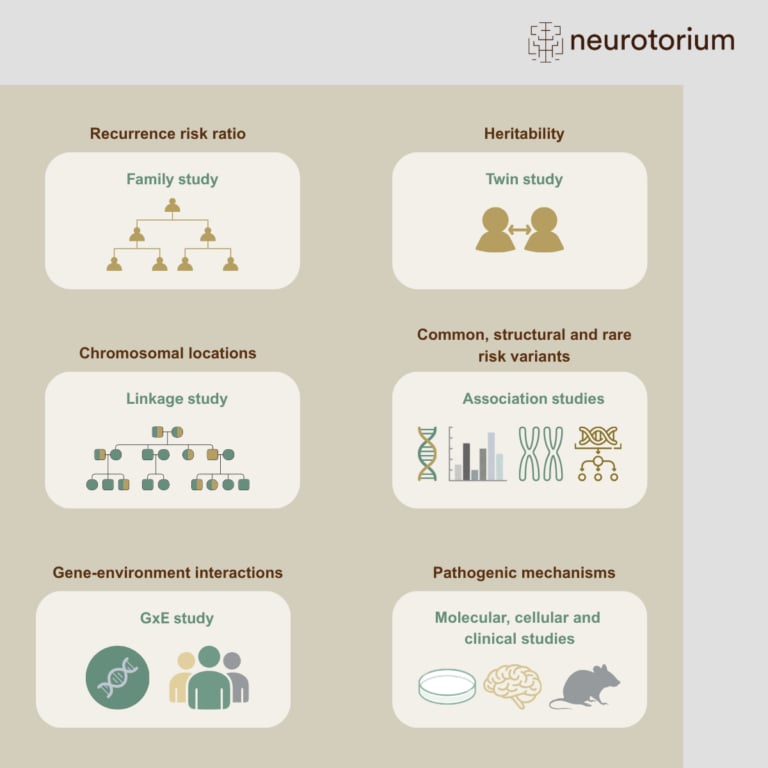
Family and twin studies estimate recurrence risk and heritability, showing that anxiety disorders aggregate in families and have a moderate genetic component.
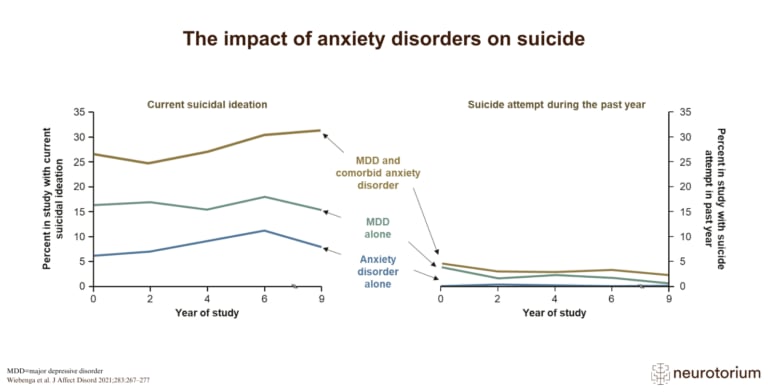
Suicidal ideation is far more common than attempts in people with anxiety or depression, especially with comorbid disorders and severe depression.