

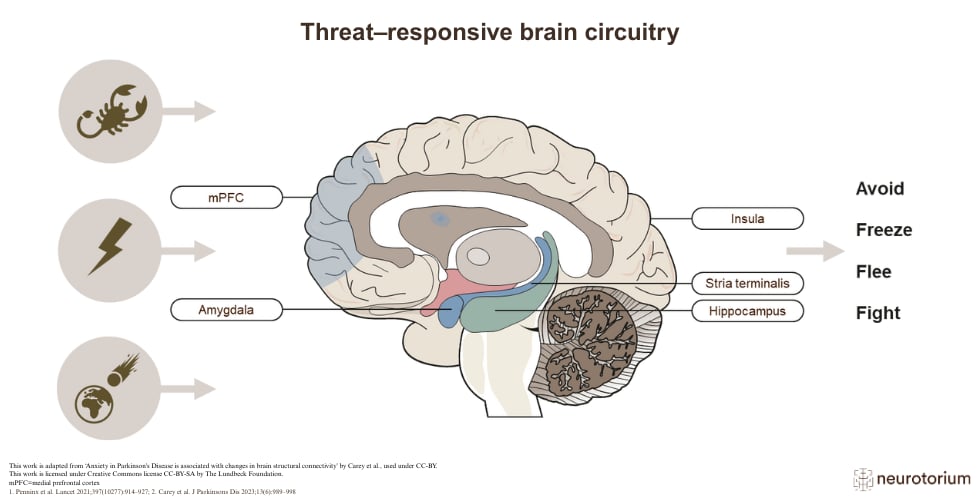
Components of the brain’s threat circuitry – including the hippocampus, stria terminalis and its bed nucleus, amygdala, and frontal regions including the medial prefrontal cortex and insula – all interact depending on the nature and proximity of perceived threats to produce an appropriate response, ranging from avoidance to fighting.1
Related content

Decades of twin and family research have established that anxiety disorders run in families and are meaningfully influenced by genetic factors. Family and twin studies suggest an increased recurrence risk for first degree relatives of patients with anxiety to develop any anxiety disorders.
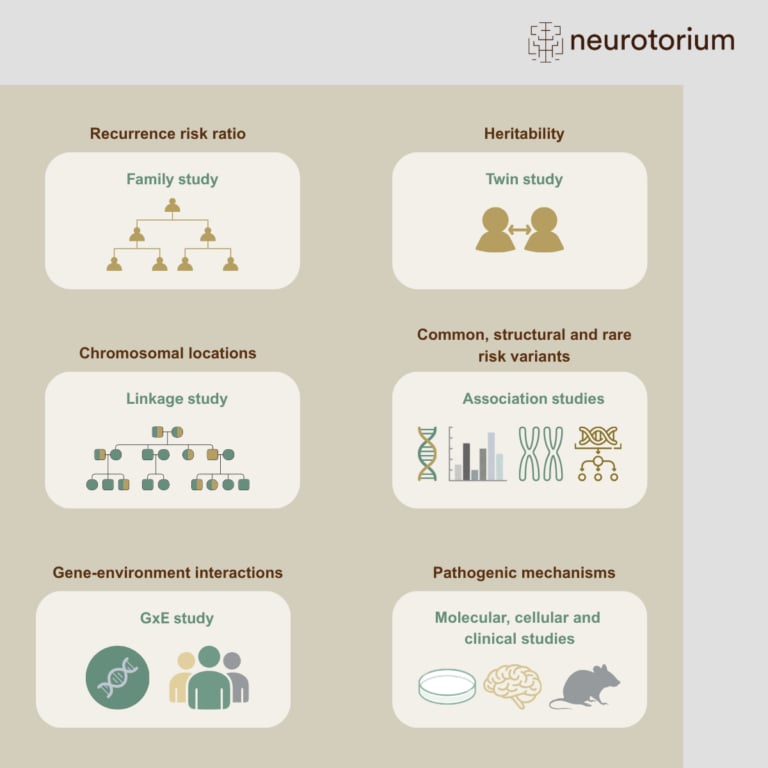
Family and twin studies estimate recurrence risk and heritability, showing that anxiety disorders aggregate in families and have a moderate genetic component.
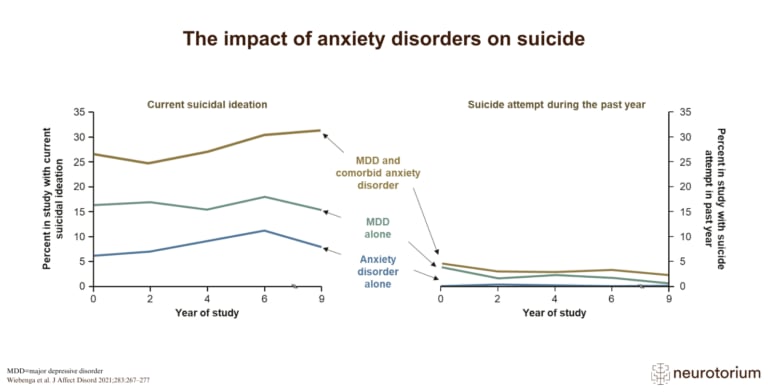
Suicidal ideation is far more common than attempts in people with anxiety or depression, especially with comorbid disorders and severe depression.