


Images
Filter
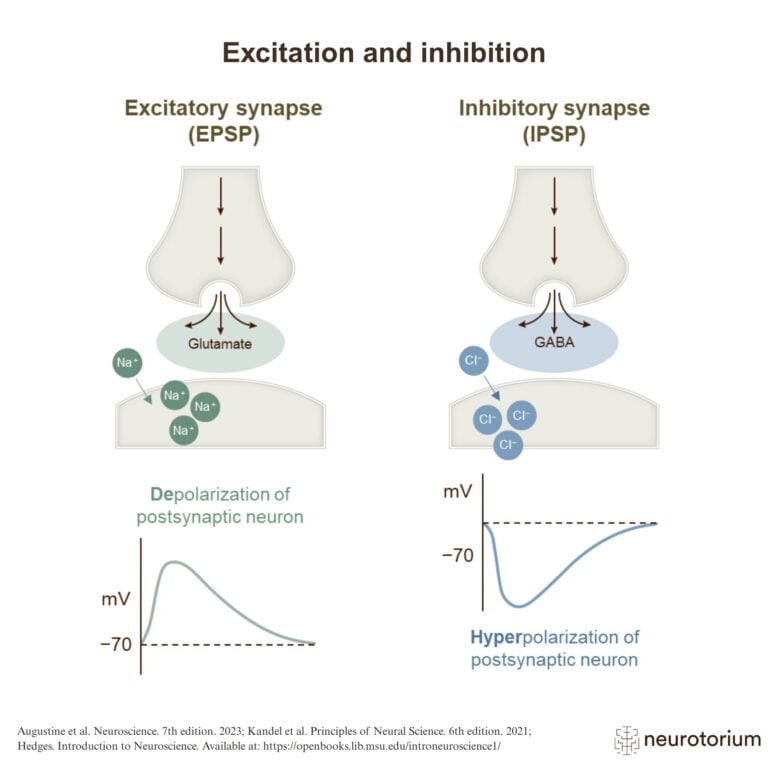
Neurons can be broadly classified into two functional types, excitatory and inhibitory, based on their neurotransmitters. The balance between excitation and inhibition in the brain is a fundamental principle of neural circuit function.
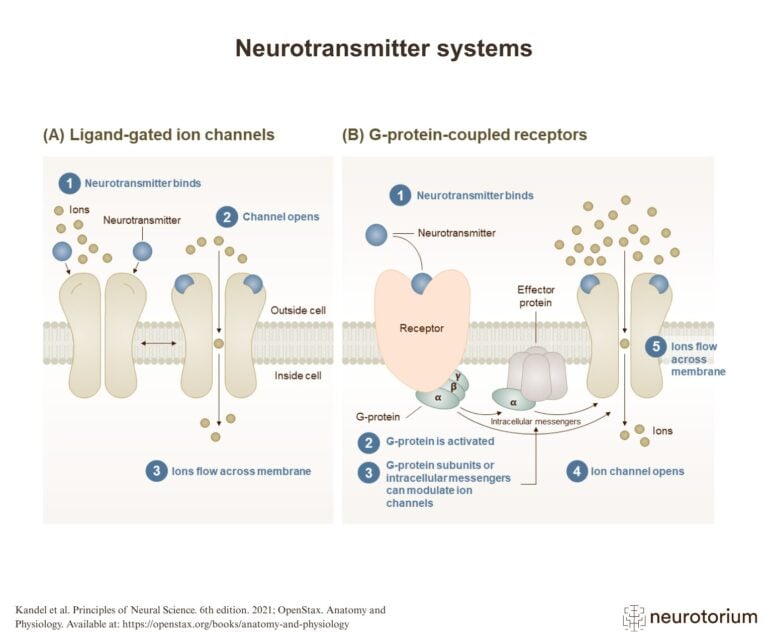
Neurotransmitters are chemical messengers that enable communication between neurons by binding to specific receptors on postsynaptic cells.
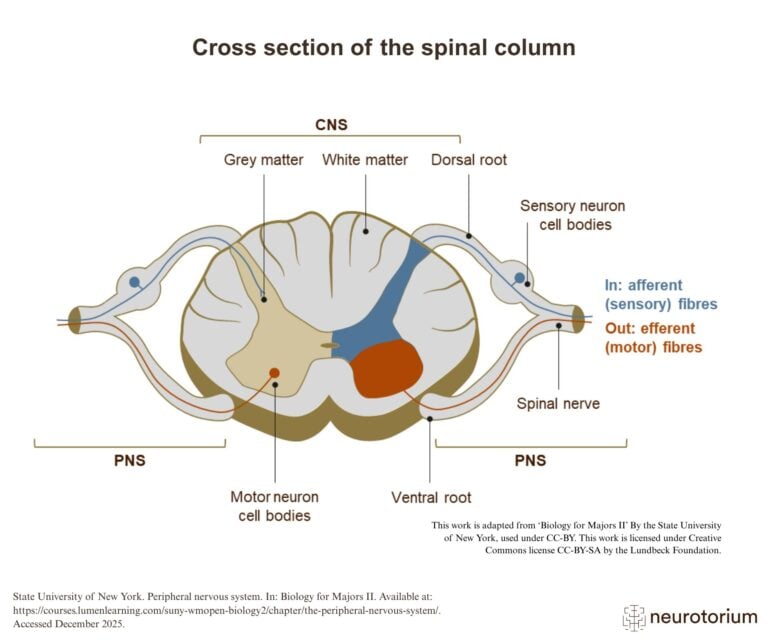
The cell bodies of large myelinated axons reside in the grey matter of the spinal cord in the anterior horn. They send their axons out of the ventral root and either directly into peripheral nerves, or nerve plexuses (a branching network of intersecting nerves) which give rise to peripheral nerves.
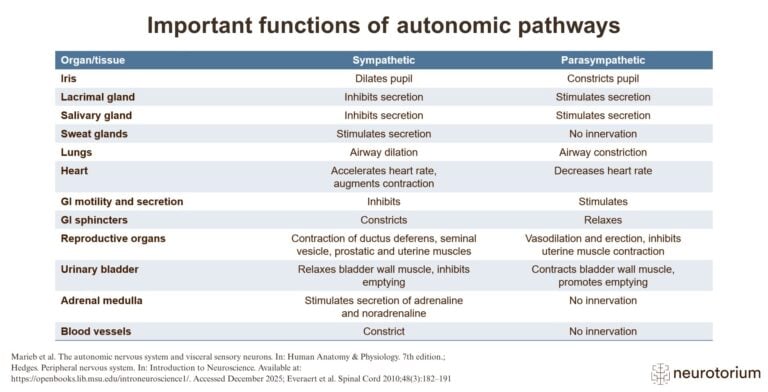
The autonomic nervous system regulates involuntary bodily functions through two complementary divisions: the sympathetic nervous system and the parasympathetic nervous system.
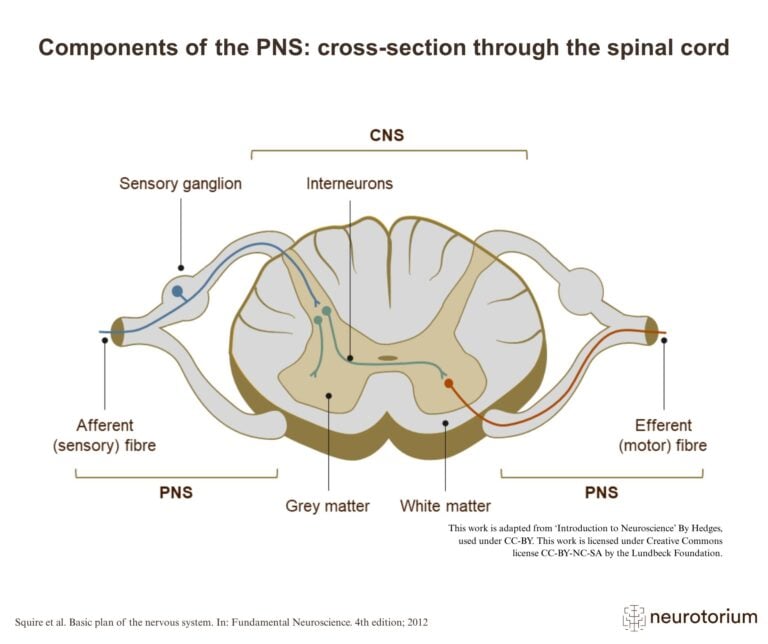
The cell bodies of efferent pathways (motor and autonomic) lie in the spinal cord of the central nervous system (CNS) and peripheral nerves contain axons from these neuronal cell bodies as well as those situated in peripheral ganglia.
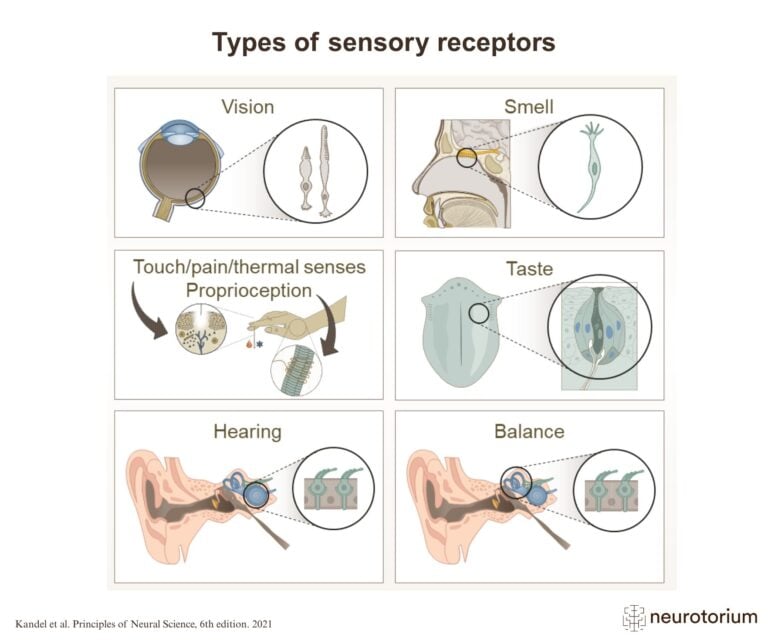
Receptors are crucial for transducing chemical, mechanical, thermal or light stimuli into signals that the rest of the nervous system will understand.
No results matched your search.
Please try again.