


Images
Filter
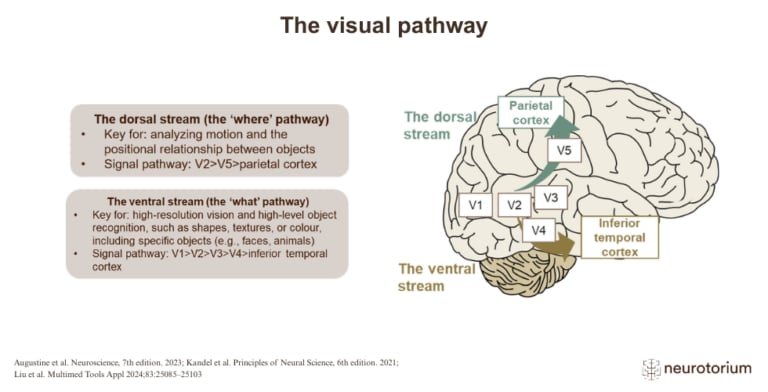
Visual information is processed through two major pathways in the brain. The dorsal stream helps determine where objects are and how they move, while the ventral stream supports object recognition by identifying features such as shape, colour, and texture.
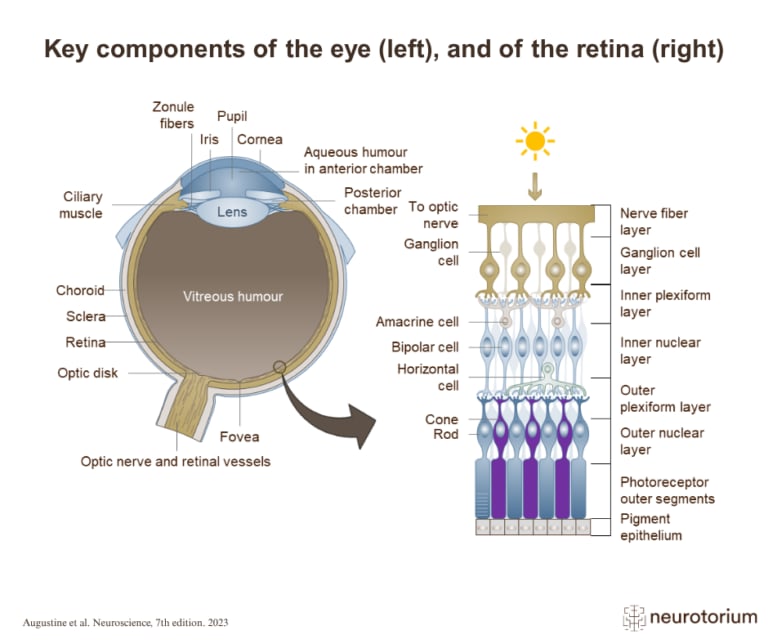
The eye captures light and focuses it onto the retina, where specialised cells convert visual information into nerve signals. These signals are processed through multiple retinal layers before being transmitted to the brain via the optic nerve.
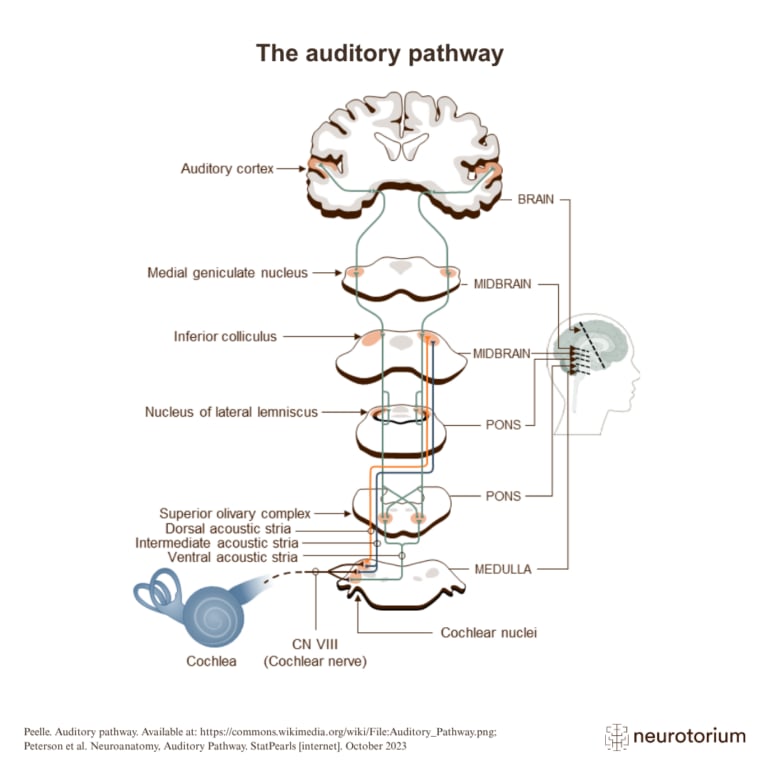
The auditory pathway carries sound information from the cochlea through brainstem and thalamic relay stations to the auditory cortex. This pathway enables the brain to process and interpret sounds from the environment.
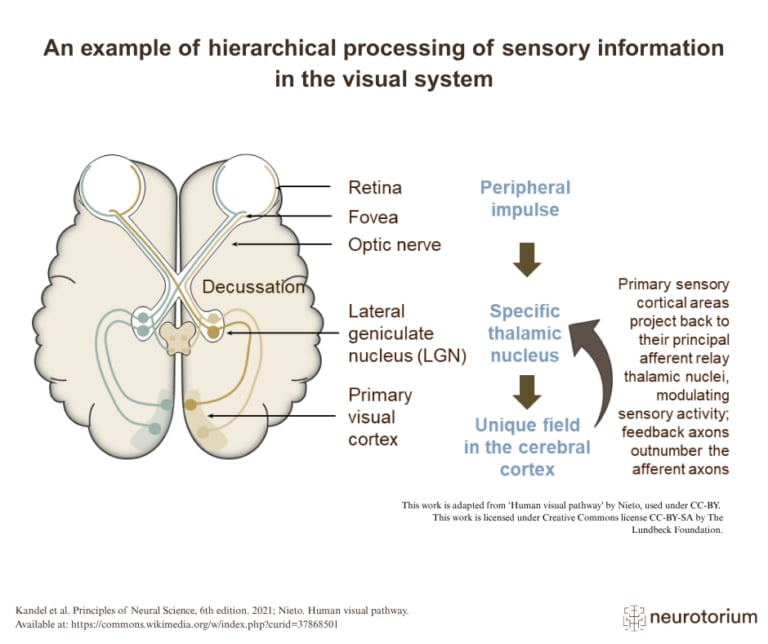
How visual information travels from the retina through the optic nerve and thalamus to the primary visual cortex. Sensory signals are processed in stages, allowing the brain to interpret and respond to visual input.
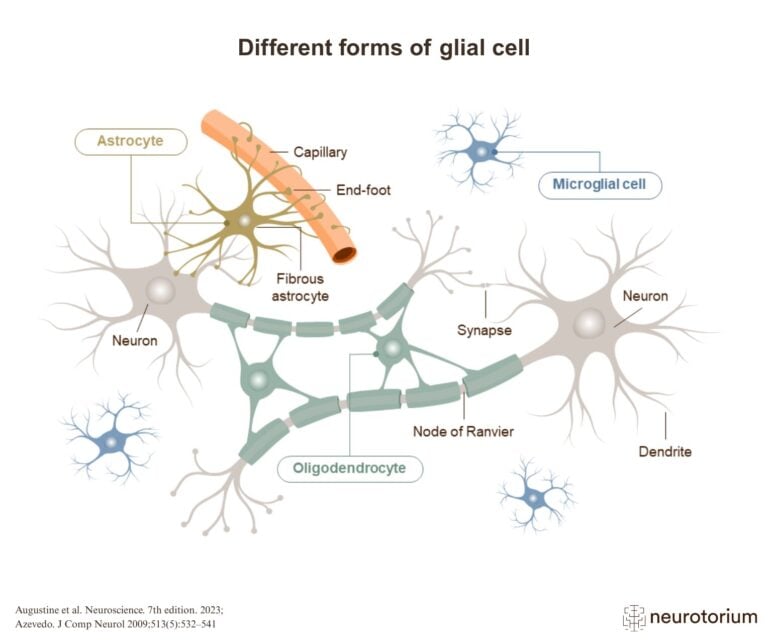
Alongside the neurons of the brain, a complex network of supporting cells known as glial cells is necessary to maintain the proper functioning of the central nervous system.
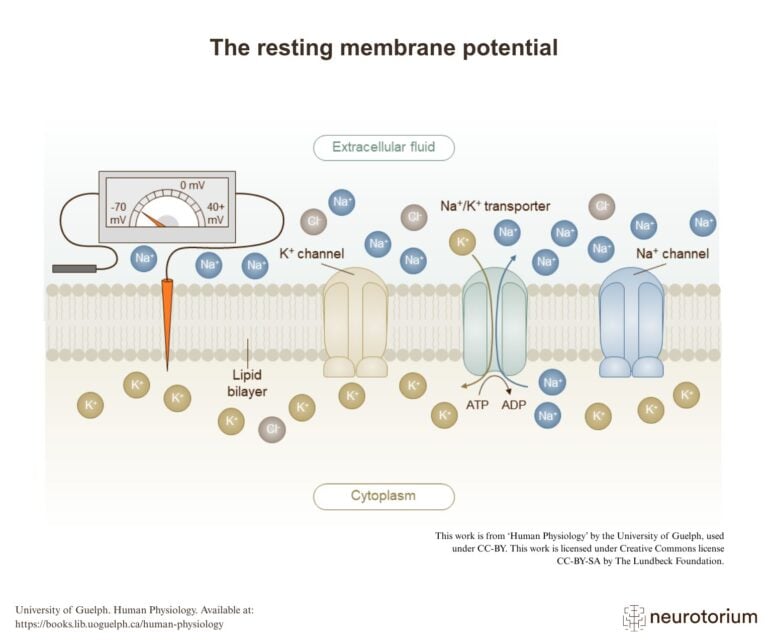
An understanding of the resting membrane potential and how action potentials are generated is key to understanding how information is transmitted in the nervous system.
No results matched your search.
Please try again.