

Images
Filter
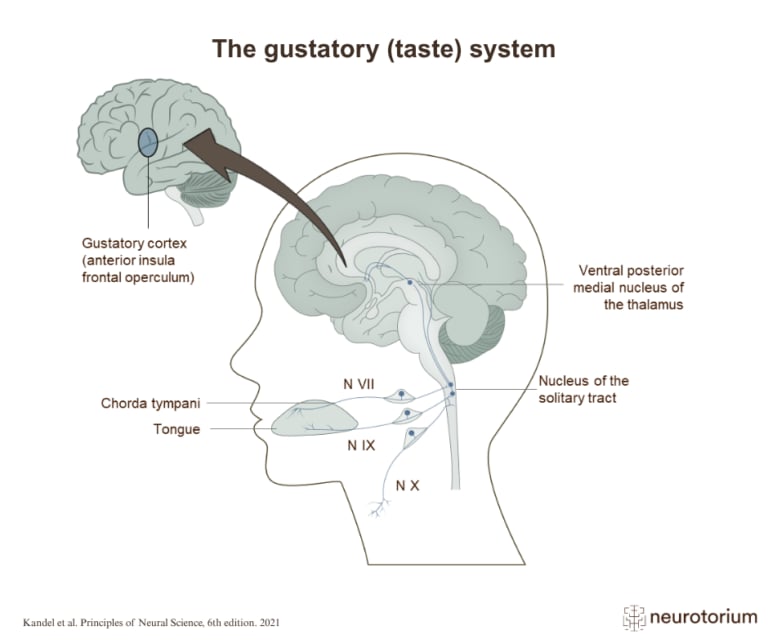
The gustatory system detects taste stimuli on the tongue and relays this information through brainstem and thalamic pathways to the gustatory cortex.
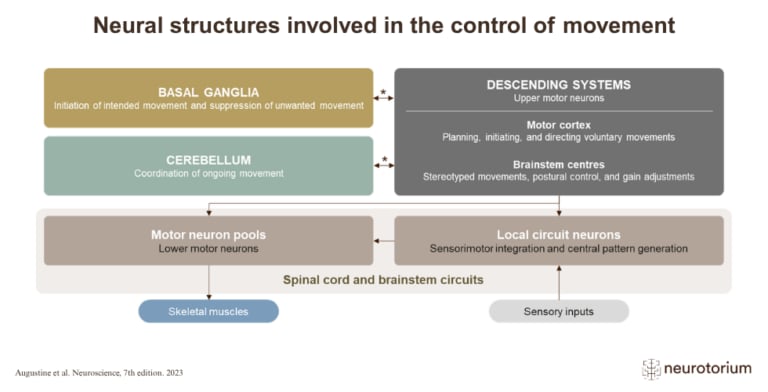
Movement is controlled by a network of brain and spinal cord structures that work together to plan, initiate, coordinate, and execute actions.
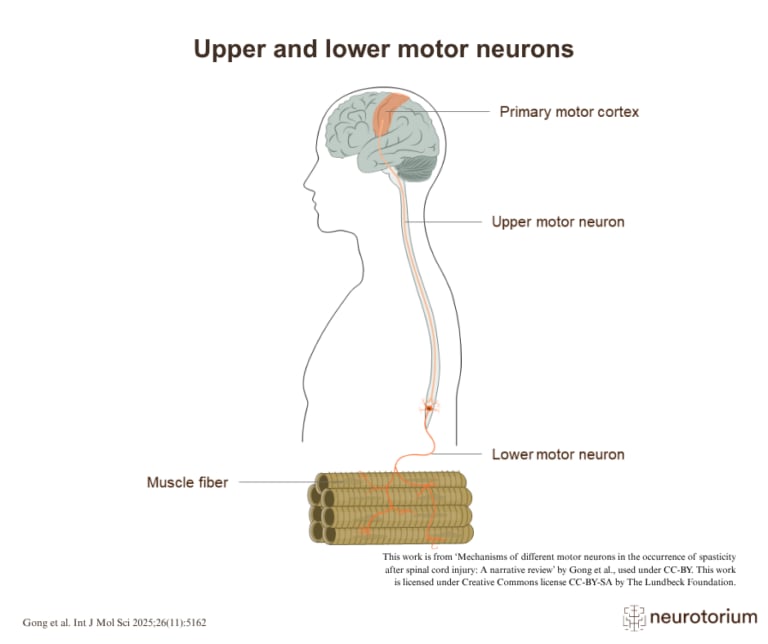
Signals from the primary motor cortex travel through upper motor neurons to lower motor neurons, which directly innervate muscle fibres and produce muscle contraction.
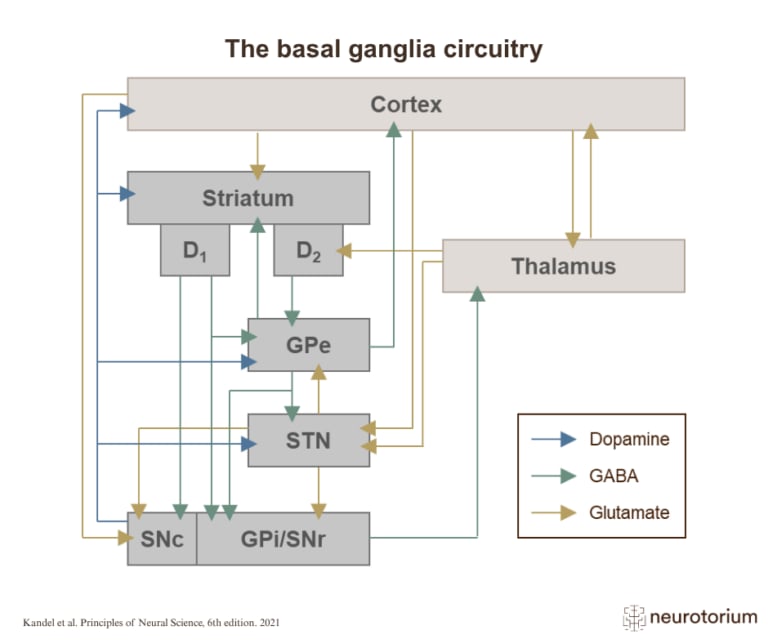
The basal ganglia circuitry consists of interconnected brain regions that help regulate movement. Through excitatory and inhibitory pathways, these circuits influence motor activity by modulating communication between the cortex and thalamus.
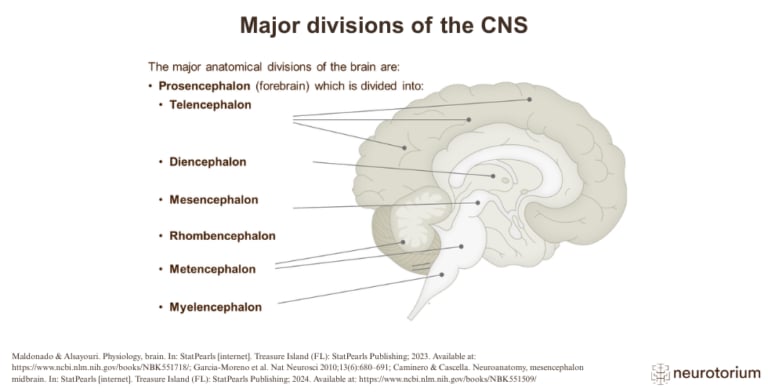
The central nervous system can be divided into several major anatomical regions. These include the forebrain, midbrain, and hindbrain, which give rise to specialised structures involved in sensory processing, movement, cognition, and autonomic functions.
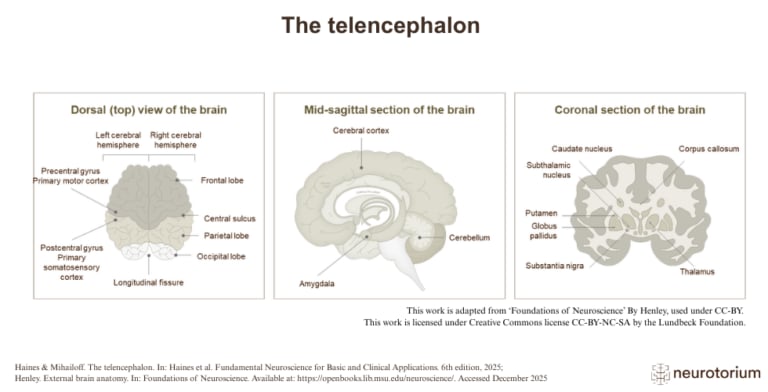
The telencephalon is the largest part of the forebrain and includes the cerebral cortex and several deep brain structures. It is involved in higher cognitive functions, sensory processing, voluntary movement, memory, and emotion.
No results matched your search.
Please try again.