


Images
Filter
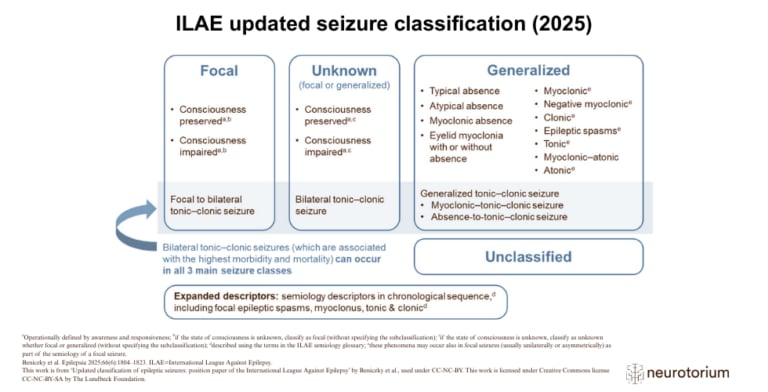
The figure illustrates the classification of seizures according to the ILAE classification. There are three main classes of seizure – focal, unknown, and generalized – within which there are many different types.
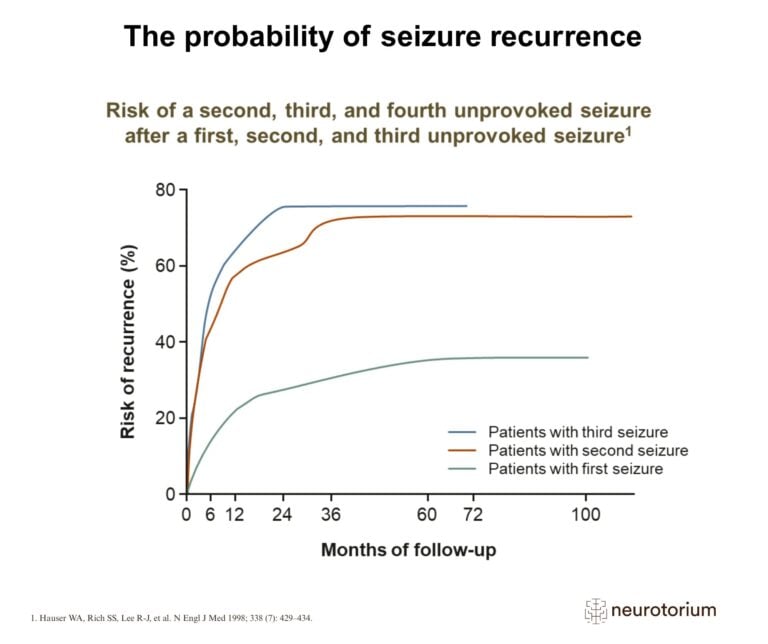
The figure illustrates the probability of seizure recurrence following a first, second, and third unprovoked seizure over long-term follow-up. The study was based on a single-centre surveillance system that was based on hospital admissions, referral for EEG, neurology, or epilepsy clinics for patients who had recently identified seizures.
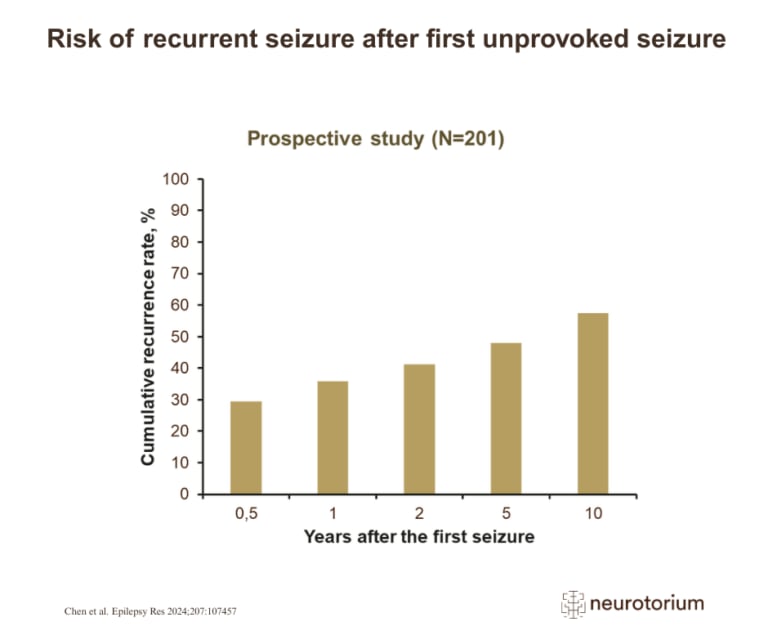
The figure shows the cumulative risk of seizure recurrence following a first unprovoked seizure over a 10-year period.
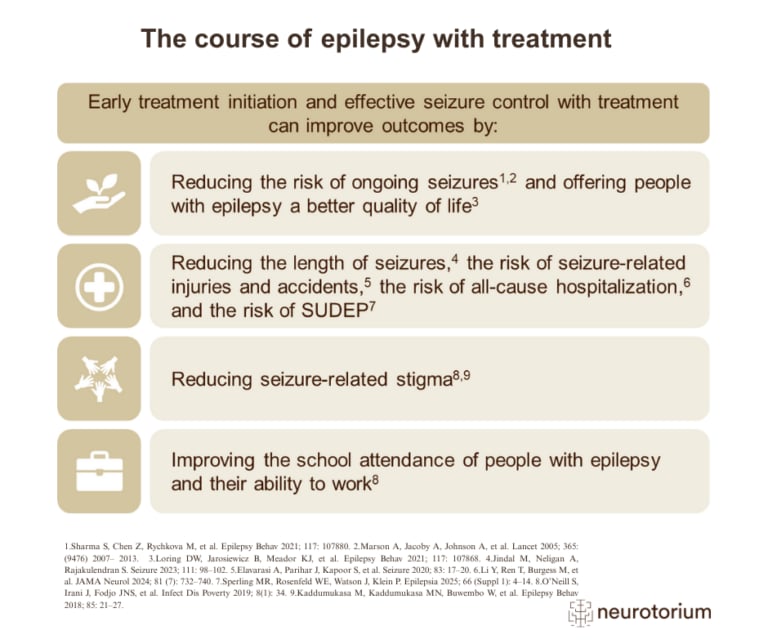
The more seizures occur, the less likely they are to be controlled. Immediate treatment is associated with lower rates of seizure recurrence and longer time to seizure recurrence than deferred treatment in patients with epilepsy, especially in those who had experienced two or more unprovoked seizures at diagnosis.
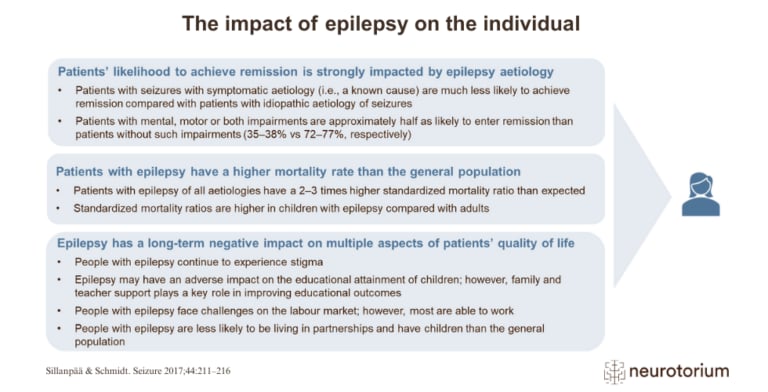
The figure summarizes how epilepsy affects individuals throughout their life course. The review of the long-term outcomes for patients receiving treatment for epilepsy concluded that for the vast majority of people with new-onset epilepsy, the outlook is very good.
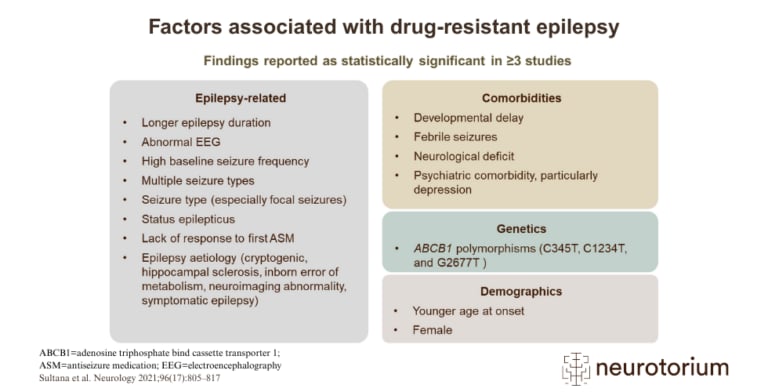
The figure summarizes factors associated with drug-resistant epilepsy reported as statistically significant in multiple studies.
No results matched your search.
Please try again.